
Introduction to the UAE Engineered Stone Market
The United Arab Emirates (UAE) has witnessed a remarkable boom in the construction and interior design sectors over the past two decades. Engineered stone, particularly quartz-based surfaces, has become a preferred material for countertops, flooring, and wall cladding due to its durability, aesthetic appeal, and low maintenance. The production of high-quality engineered stone relies heavily on the consistent and efficient supply of fine quartz powder, which serves as the primary filler. The quartz powder must meet stringent specifications in terms of particle size distribution (typically 80–325 mesh or finer), purity, and shape to ensure optimal bonding with resins and pigments.
Grinding quartz, a hard and abrasive mineral with a Mohs hardness of 7, presents significant challenges. Traditional grinding mills often suffer from high wear rates, excessive energy consumption, and inconsistent product fineness. Therefore, manufacturers in the UAE are increasingly seeking advanced, reliable, and energy-efficient milling solutions that can handle high throughput while maintaining strict quality standards. This article explores the technical requirements for quartz powder production in the engineered stone industry and presents state-of-the-art grinding equipment from Shanghai Zenith Machinery Co., Ltd., a leading Chinese manufacturer of ore grinding machinery.
Key Requirements for Quartz Powder in Engineered Stone
Engineered stone formulas typically contain 90–93% natural quartz by weight. The remaining fraction consists of polyester resins, pigments, and curing agents. The quartz powder serves multiple functions: it provides structural strength, reduces resin consumption, and enhances the visual texture. Critical parameters include:
- Fineness: Most engineered stone producers require a distribution where 90–95% of particles pass through a 200-mesh or 325-mesh sieve. Oversized particles create surface defects, while ultrafine particles (below 10 µm) may increase resin demand.
- Particle shape: Angular or sharp-edged particles improve mechanical interlocking within the matrix, but excessive fines can cause dusting issues.
- Moisture content: A dry powder (moisture <0.5%) is essential to prevent resin curing problems.
- Consistency: Batch-to-batch uniformity is crucial for automated mixing and color matching.
To achieve these specifications, the milling process must combine efficient size reduction with precise classification. This is where Shanghai Zenith’s grinding mills excel, offering integrated drying (if needed), grinding, and classifying functions in a single compact unit.
Shanghai Zenith Machinery: A Trusted Partner for Grinding Solutions
Shanghai Zenith Machinery Co., Ltd. has been at the forefront of mineral processing equipment innovation for decades. As an excellent manufacturer of ore grinding equipment in China, the company has made great achievements in ultra-fine powder grinding. Their product portfolio includes a wide range of mills designed to handle materials from hard quartz to soft limestone, with capacities ranging from a few tons per hour to over a hundred tons.
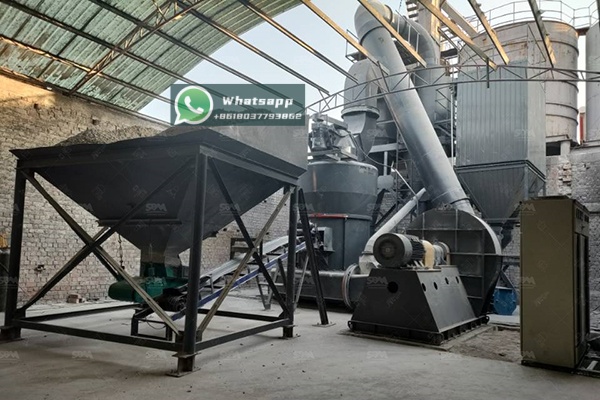
For the UAE engineered stone industry, two families of mills stand out due to their proven performance on quartz: the MTW Trapezium Grinding Mill and the LM Vertical Grinding Mill. Both systems incorporate advanced technology to deliver high throughput, low energy consumption, and consistent product quality.
The MTW Trapezium Grinding Mill: Robust and Eco-Friendly
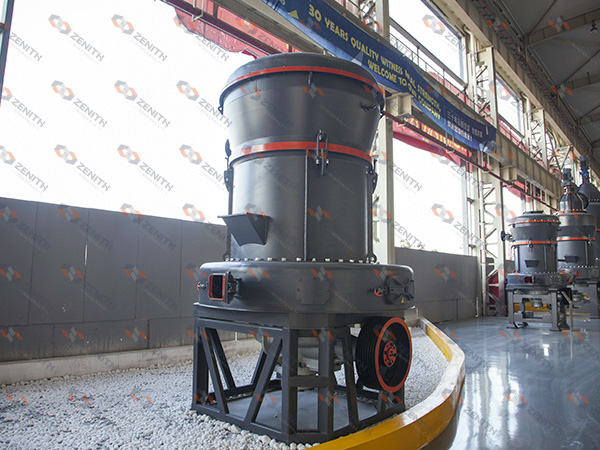
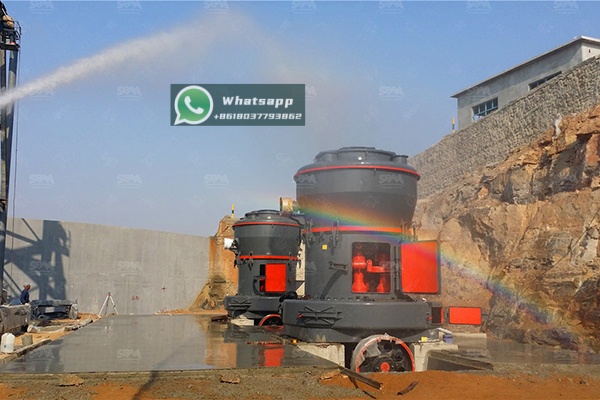
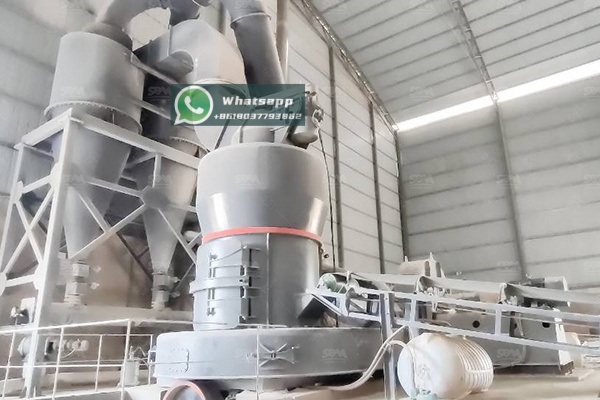
The MTW series is a multi-patented trapezium mill that has become a popular choice for medium to fine grinding of non-metallic minerals. Its key features include a compact structure, long service life, and environmental friendliness. For quartz grinding, the MTW mill offers the following advantages:
- High efficiency: The trapezium-shaped grinding rollers and ring create a larger grinding surface area, reducing energy consumption per ton of product.
- Adjustable fineness: The built-in classifier can produce powders from 1.6 mm down to 0.038 mm (400 mesh), allowing easy adjustment to meet engineered stone specifications.
- Low maintenance: The mill utilizes a thin oil lubrication system and replaceable wear parts, minimizing downtime.
- Environmental compliance: A pulse bag filter system ensures dust-free operation, which is critical for working environments in the UAE.
Recommended model for medium-scale production: The MTW138Z with a feed size of up to 35 mm can produce 6–17 t/h of quartz powder at 0.045–1.6 mm fineness. Its main motor power of 90 kW and fan motor of 110 kW offer a balanced cost-performance ratio. For larger requirements, the MTW175G (9.5–25 t/h) or the flagship MTW215G (15–45 t/h) are excellent choices.
We strongly recommend the MTW Trapezium Mill series for engineered stone producers who prioritize reliability, easy operation, and a proven track record in quartz grinding.
The LM Vertical Grinding Mill: Integrated Solution for High-Capacity Plants
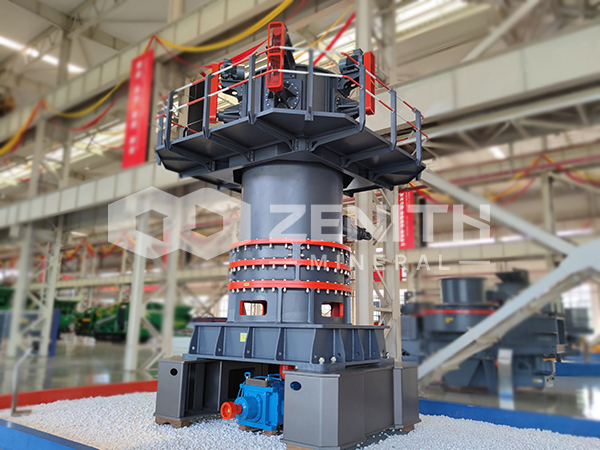
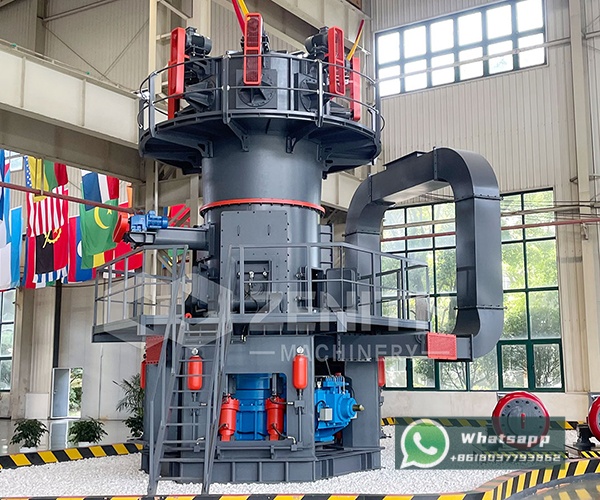
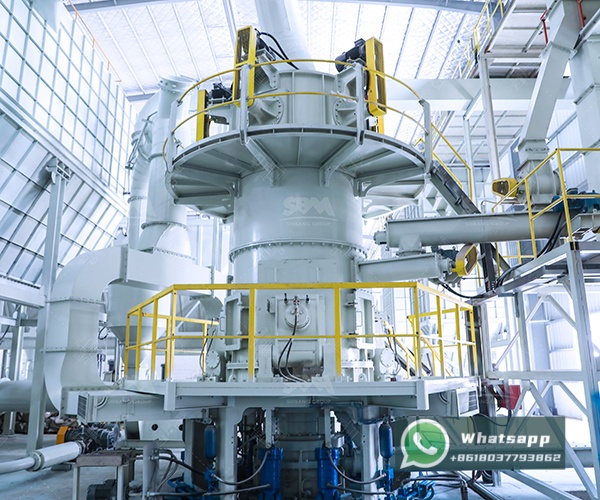
When the production scale exceeds 20 t/h, or when the plant requires a single machine that can handle drying, grinding, and classifying simultaneously, the LM Vertical Grinding Mill becomes the optimal solution. This mill integrates five functions—crushing, grinding, powder selection, drying, and material conveying—into one unit, drastically reducing the footprint and auxiliary equipment.
For quartz applications, the LM vertical mill offers:
- Excellent drying capability: Even if the feed material has a moisture content of up to 15%, the hot air system can dry it during the grinding process.
- Steep particle size distribution: The dynamic classifier produces a narrow range of fines, ideal for engineered stone formulations.
- Energy savings: Compared to ball mills, the vertical mill consumes 30–50% less energy for the same fineness.
- Low wear: The grinding rollers and table are made of high-chrome alloy, extending service life even with highly abrasive quartz.
Recommended model: The LM190K (plate diameter 1900 mm) can produce 23–68 t/h of quartz powder with fineness down to 170–40 µm. Its main motor power of 500 kW and a maximum feed size of 45 mm make it suitable for large engineered stone manufacturing plants in the UAE. For even higher capacity, the LM280K delivers 50–170 t/h.
We highly recommend the LM Vertical Grinding Mill for greenfield projects or expansions where space is limited, and high throughput with low operating cost is the priority.
Other Zenith Mills Suitable for Quartz
While MTW and LM are the primary recommendations, other Zenith mills also offer value in specific scenarios:
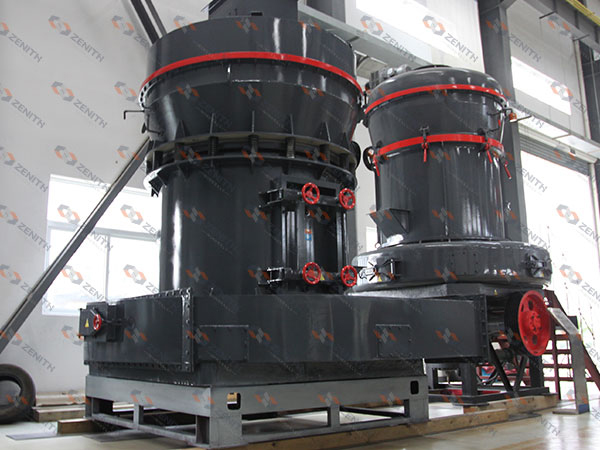
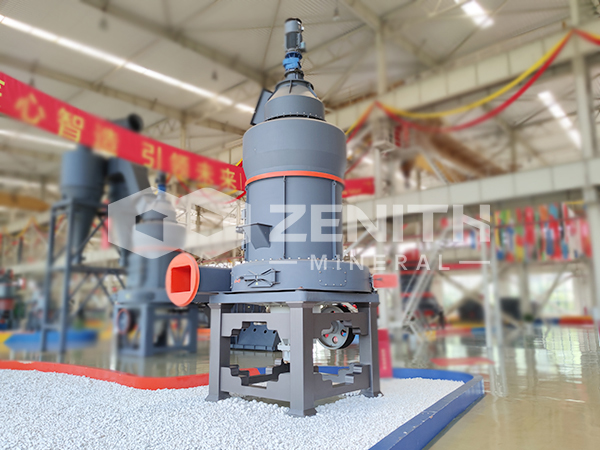
- MTM Medium-Speed Grinding Mill: An ideal substitute for traditional Raymond mills, the MTM series (e.g., MTM130, MTM160) is suitable for small to medium plants with feed sizes under 35 mm. It is energy-saving and has a lower initial investment.
- LUM Ultrafine Vertical Mill: For applications requiring ultra-fine quartz powder (5–30 µm, i.e., 600–2500 mesh), the LUM series (e.g., LUM1525, LUM1632) produces high-content end-fines with intelligent control. This is particularly useful for specialty engineered stones that demand a higher resin-to-filler ratio or a smoother surface finish.
- Ball Mill (Wet or Dry): Although less energy-efficient than vertical mills, ball mills are extremely robust and can produce consistent fine powder. They are often used in combination with classifiers for custom fineness. The wet-type overflow ball mill (GMQY series) can be employed if a slurry process is preferred.
Case Study: Meeting UAE Standards
Consider a hypothetical engineered stone manufacturer in Dubai producing 50,000 tons of slabs per year. They require 45,000 tons of quartz powder annually (90% of slab weight). With an operating schedule of 300 days and two shifts, the daily powder demand is 150 tons. A single LM190K vertical mill operating at 25 t/h (with 85% uptime) can fulfill this demand comfortably. The mill’s low wear rate and energy consumption (typically 25–30 kWh/t for 200-mesh quartz) translate into significant cost savings. Additionally, the integrated classifier ensures that the powder meets the target 325-mesh specification with less than 5% oversize.
For smaller operations (e.g., 10,000 t/year), an MTW138Z running 8–10 hours per day would be a capital-efficient choice, offering flexibility and easy maintenance.
Conclusion
The UAE engineered stone industry is poised for continued growth, driven by infrastructure projects and a thriving real estate market. To maintain a competitive edge, producers must invest in grinding equipment that delivers high throughput, consistent quality, and low operating costs. Shanghai Zenith Machinery Co., Ltd. provides a comprehensive range of mills tailored to these needs. Whether you choose the versatile MTW Trapezium Mill or the high-capacity LM Vertical Mill, you can be assured of reliable performance backed by decades of expertise in powder processing.
For a detailed analysis of your specific quartz grinding requirements—including feed characteristics, desired fineness, and capacity—contact Shanghai Zenith’s technical team. Their experience with engineered stone applications in the Middle East, combined with a full line of ancillary equipment (conveyors, feeders, dust collectors), ensures a turnkey solution that will maximize your return on investment.
Keywords: Quartz powder mill, UAE engineered stone, Shanghai Zenith, grinding mill, MTW trapezium mill, LM vertical mill, quartz grinding equipment.
Key Equipment
Want This Solution for Your Project?
Contact us for a customized quotation and technical proposal.
Interested in This Solution?
Send us a message and our engineers will get back to you within 24 hours.