
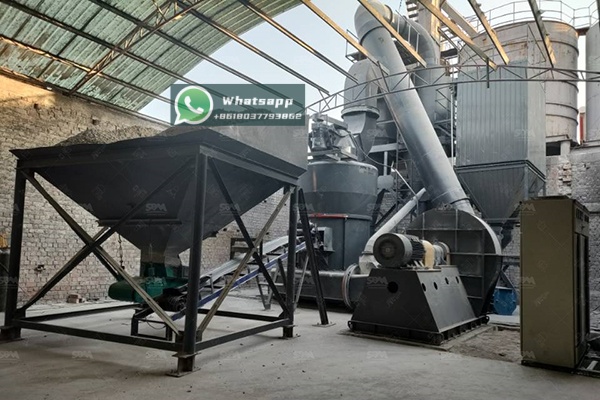

Introduction
India is among the world’s largest agricultural economies, and its food security depends heavily on the availability of high-quality fertilizers. Among the three primary plant nutrients, phosphorus plays an indispensable role in root development, energy transfer, and crop maturation. To feed a growing population, Indian farmers rely on phosphate-rich fertilizers such as single super phosphate (SSP), di-ammonium phosphate (DAP), and various NPK compounds. The production of these agricultural nutrients begins at the phosphate milling line, where raw phosphate rock is crushed, ground, and classified to a specific fineness that maximizes chemical reactivity and agronomic efficiency.
Shanghai Zenith Machinery Co., Ltd. is an excellent manufacturer of ore grinding equipment in China and has made great achievements in ultrafine powder grinding. With years of experience in the research, development, and production of industrial powder grinding equipment, Zenith offers a complete range of mills that can transform hard, abrasive phosphate rock into a fine powder suitable for downstream fertilizer manufacturing. This article provides a professional overview of a phosphate milling line for India agricultural nutrients, focusing on process design, equipment selection, and the advantages of Zenith’s technology.

Why Milling Phosphate Rock Matters for Indian Agriculture
Phosphate rock is a naturally occurring mineral, primarily composed of calcium phosphate in the form of apatite. In its raw state, phosphate rock is not directly available to plants. It must be chemically processed into phosphoric acid or single super phosphate, or finely ground for direct application in certain soil conditions. The term “phosphate milling line” refers to the integrated system of crushers, grinders, classifiers, and conveyors that reduce mined phosphate rock to the required particle size.
For India, where domestic phosphate reserves are limited, imported rock phosphate must be processed as efficiently as possible. Finely ground phosphate rock increases the surface area available for chemical reaction in acidulation tanks, improves the conversion rate of phosphate into plant-available forms, and reduces the consumption of sulfuric acid in SSP production. In addition, consistent fineness ensures uniform product quality, which is essential for the blending of NPK fertilizers.
Challenges in Phosphate Rock Grinding
Phosphate rock is abrasive and may contain varying levels of moisture, silica, and carbonate impurities. These properties create several challenges for milling equipment. First, abrasion leads to rapid wear of grinding rolls, liners, and classifier blades. Second, fluctuations in feed size and moisture affect throughput and energy consumption. Third, dust generated during grinding must be collected to meet environmental regulations and protect operator health.
An efficient phosphate milling line must therefore combine robust construction, intelligent control, and dust-tight operation. Zenith’s grinding mills are designed with high-chromium wear parts and sealed systems to handle abrasive minerals while maintaining high availability. The compact structure and optimized airflow also reduce the plant footprint and energy intensity, which are critical factors for fertilizer producers in India.
Process Flow of a Phosphate Milling Line
A typical phosphate milling line for agricultural nutrients includes several stages:
Primary Crushing
Run-of-mine phosphate rock is reduced to below 30-50 mm by jaw crushers or hammer crushers before entering the grinding mill. Zenith’s hammer mill can also be used for coarse crushing, with a discharge size of 0-3 mm and capacities up to 70 t/h.
Grinding
Crushed phosphate is fed into a mill, where it is ground to the target fineness, usually 0.045 mm (325 mesh) for SSP or DAP processes. The choice of mill depends on the hardness of the rock, moisture content, throughput, and final particle size.
Classification and Collection
Air classifiers separate fine powder from oversized particles, returning the latter for regrinding. Cyclones and bag filters collect the finished powder while allowing clean air to be discharged. Zenith mills integrate classification and drying functions into one unit, simplifying the flow and reducing capital cost.
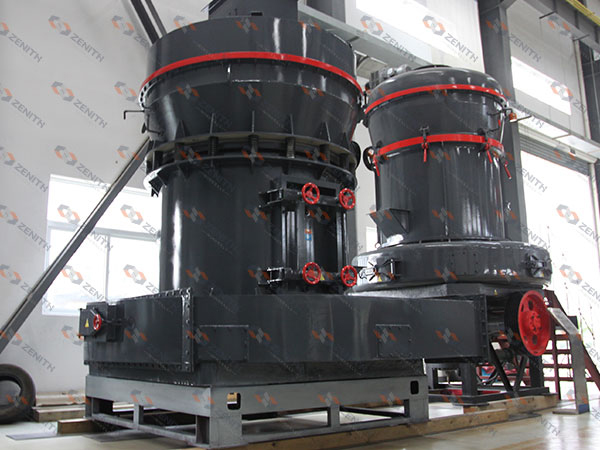
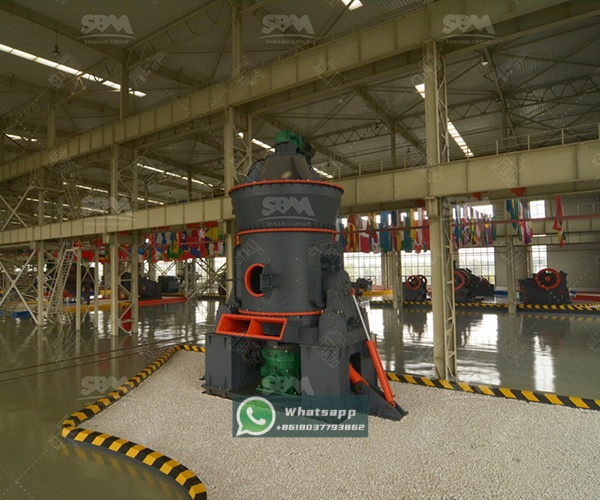
For many Indian phosphate producers, the MTW Trapezium Grinding Mill is the heart of the dry milling line. A product image is shown below.
Recommended Zenith Products for India Phosphate Milling
Zenith offers several grinding mills that are well-suited to phosphate processing. Based on actual demand for agricultural nutrient production, the company recommends the following two products:
MTW Trapezium Grinding Mill
The MTW Trapezium Grinding Mill is a multi-patent mill featuring a compact structure, long service life, and environmentally friendly operation. It is ideal for processing materials with a maximum feed size of 50 mm and can produce final powders as fine as 0.038 mm. The following table lists the main models:
| Model | Max Feed Size (mm) | Final Size (mm) | Capacity (t/h) |
|---|---|---|---|
| MTW110Z | <30 | 1.6-0.045 | 3-10 |
| MTW138Z | <35 | 1.6-0.045 | 6-17 |
| MTW175G | <40 | 1.6-0.045 | 9.5-25 |
| MTW215G | <50 | 1.6-0.045 | 15-45 |
For example, the MTW215G model is well matched to a medium-large phosphate milling line. It accepts feed sizes up to 50 mm and produces 15-45 t/h with a main motor power of 280 kW and a fan motor power of 315 kW. This high capacity reduces the number of parallel units required, lowering capital and operating costs.
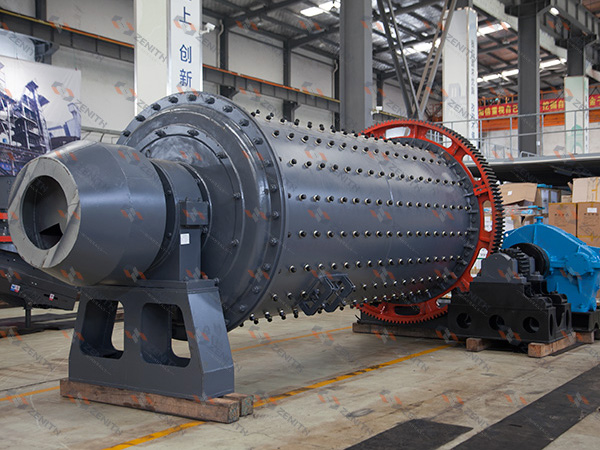
Wet Type Over-Flow Ball Mill
In wet phosphate processing, sometimes called the “slurry route”, the rock phosphate is ground with water and recycled acid to produce a slurry for reactor feed. Zenith’s wet type over-flow ball mills are highly adaptable and easy to operate. The GMQY2445 model has an effective volume of 18.2 m³ and a grinding media weight of 31 t, with a motor power of 355 kW. Ball mills are ideal for continuous production, and the fineness can be adjusted by changing the feed rate or grinding media charge.
Choosing between the MTW mill and the ball mill depends on the downstream process. For dry granular fertilizer plants, the MTW mill gives a uniform dry powder with low moisture. For phosphoric acid plants, the wet ball mill integrates directly with the acidulation step and avoids the cost of drying the rock. In many configurations, a combination of a hammer mill for pre-crushing and an MTW mill for final grinding produces excellent results.

Advantages of Zenith Milling Equipment for Indian Producers
Shanghai Zenith Machinery has developed a complete line of industrial powder grinding equipment, including MTW Trapezium Grinding Mill, Ball Mill, MTM Medium-Speed Grinding Mill, Raymond Mill, LM Vertical Grinding Mill, LUM Ultrafine Vertical Mill, XZM Ultrafine Grinding Mill, and Hammer Mill. For phosphate milling, the main advantages are:
- High grinding efficiency and low energy consumption.
- Wear-resistant materials that extend service life.
- Intelligent control systems for stable product quality.
- Compact design that reduces floor space and civil works.
- Eco-friendly operation with integrated dust collection.
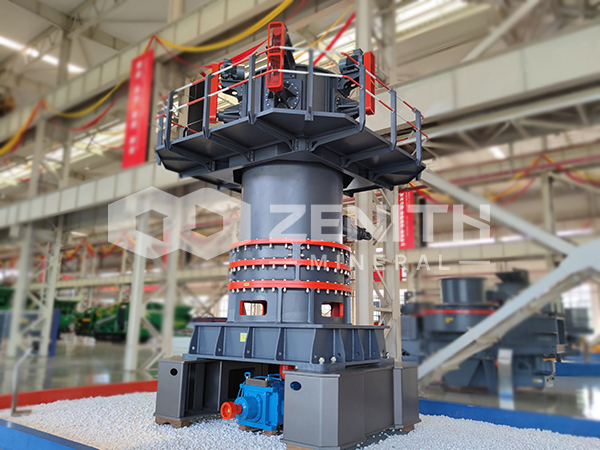
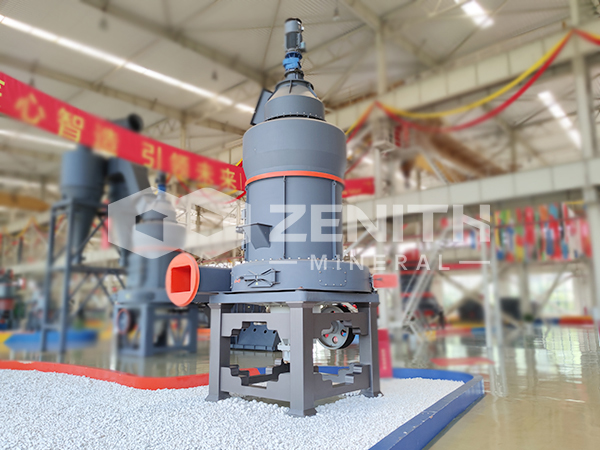
Zenith’s mills are especially suited for materials with moisture content below 6%, which is typical for beneficiated phosphate rock. The LM Vertical Grinding Mill can combine grinding, drying, and classifying in one machine, while the LUM Ultrafine Vertical Mill can achieve D97 5-30 microns for high value-added products. However, for most agricultural phosphate applications, the MTW Trapezium Grinding Mill and Ball Mill remain the most practical and cost-effective choices.
Building a Phosphate Milling Line for India
A complete phosphate milling line designed by Zenith for India agricultural nutrients includes the following equipment: a primary jaw crusher or hammer mill, a storage silo with vibrating feeder, an MTW Trapezium Grinding Mill, a bag filter and cyclone collector, a fan and control cabinet, and a final product conveying system. The line can be tailored to local requirements, from a 3 t/h pilot plant using an MTW110Z to a 45 t/h industrial line using an MTW215G.
Zenith also supplies the necessary technical documentation, installation drawings, and after-sales service. Since India’s fertilizer industry is expanding to reduce import dependency, local production of phosphate fertilizers must be supported by reliable, efficient milling technology. With Zenith’s experience in ore grinding and powder processing, Indian producers can achieve high throughput, excellent fineness, and low operating cost.
Conclusion
Phosphate milling is a critical step in the production of India’s agricultural nutrients. Proper grinding increases the reactivity and efficiency of phosphate fertilizers, contributing to higher crop yields and food security. Shanghai Zenith Machinery Co., Ltd. offers advanced milling solutions that combine robust design, high capacity, and energy efficiency. The MTW Trapezium Grinding Mill and the wet type over-flow Ball Mill are excellent recommendations for dry and wet phosphate processes respectively.
By partnering with Zenith, Indian phosphate producers can build a modern, reliable, and cost-effective milling line that meets the demands of the agricultural nutrient market. Whether the goal is to expand existing capacity or establish a new SSP/DAP production unit, Zenith’s professional team is ready to provide a tailored solution.
Key Equipment
Want This Solution for Your Project?
Contact us for a customized quotation and technical proposal.

Interested in This Solution?
Send us a message and our engineers will get back to you within 24 hours.