
1. Introduction: The Growing Demand for Petroleum Coke in Pakistan’s Industrial Boilers
Pakistan’s industrial sector, particularly in textiles, cement, and chemical processing, relies heavily on efficient and cost-effective fuel sources for industrial boilers. Petroleum coke (petcoke), a by-product of oil refining, has emerged as a popular alternative to traditional fuels like coal and natural gas due to its high calorific value (typically 30–35 MJ/kg) and lower cost. However, raw petcoke cannot be used directly in most boilers; it must be ground into a fine powder (typically 75% passing 200 mesh or finer) to achieve complete combustion and maximize thermal efficiency. This creates a critical need for reliable, high-capacity petroleum coke milling lines tailored to the specific requirements of Pakistani industrial users.
Shanghai Zenith Machinery Co., Ltd., a leading Chinese manufacturer of ore grinding equipment, has extensive experience in designing and supplying complete milling systems for petcoke in markets like the Middle East, South Asia, and Africa. Our solutions are engineered to handle the abrasive nature of petcoke, its low volatile content, and the need for continuous, dust-free operation. This article provides a comprehensive overview of a typical petroleum coke milling line for Pakistani industrial boilers, highlighting key equipment selections and performance parameters.
2. Key Characteristics of Petroleum Coke for Boiler Fuel
Petroleum coke is a carbon-rich solid with a hard, porous structure. Depending on the refining process, it can be classified as sponge coke, needle coke, or shot coke. For industrial boiler applications, the most common types are fuel-grade sponge coke or shot coke. Important properties that influence the milling process include:
- Hardness: Petcoke is relatively hard, with a Mohs hardness of 2.5–3.5, requiring robust grinding equipment.
- Abrasiveness: High ash content (typically 0.5–5%) and silica impurities accelerate wear on grinding parts.
- Moisture Content: Usually low (1–5%), but surface moisture can cause bridging in feed systems.
- Volatile Matter: Low (5–15%), which makes petcoke harder to ignite; fine grinding improves combustion stability.
- Particle Size Requirements: For suspension-fired boilers, the fineness target is often 80–90% passing 200 mesh (74 μm) or even finer for high-efficiency operation.
3. Complete Petroleum Coke Milling Line: Process Flow
A typical milling line for petcoke used in industrial boilers consists of four main stages: raw material handling & crushing, grinding, classification, and product collection & storage. Below is a standard process flow diagram.
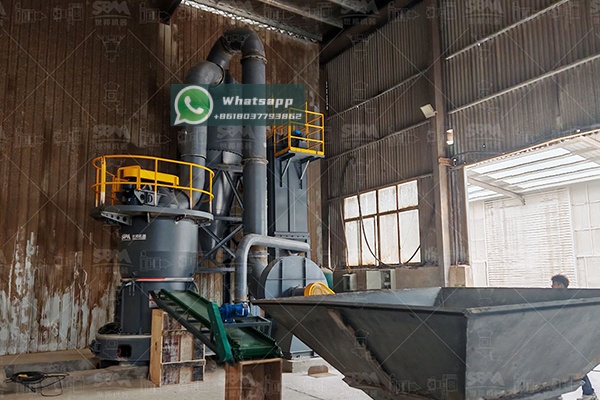
- Raw Material Handling: Raw petcoke (lump size up to 50–100 mm) is stored in a covered yard or silo. A belt conveyor or screw feeder delivers it to a vibrating feeder, which controls the feed rate into a primary crusher (e.g., hammer crusher or jaw crusher) to reduce the particle size below 30–40 mm for downstream grinding.
- Grinding Stage: The crushed petcoke enters the grinding mill. Depending on capacity and fineness requirements, we recommend either a vertical roller mill (such as the LM series) or a trapezium grinding mill (such as the MTW series). The mill simultaneously grinds and dries the material using hot air from an air heater (if needed). The rotating classifier separates the fine powder, while oversized particles are returned to the grinding zone.
- Classification & Product Collection: The fine powder suspended in the gas stream passes through a cyclone collector and a baghouse filter to recover the product. The clean gas is exhausted via an ID fan to the atmosphere. The collected petcoke powder is transported by a pneumatic conveying system to a product silo for storage or direct feeding to the boiler.
- Control System: A PLC-based automation system monitors key parameters such as mill load, temperature, pressure, and product fineness to ensure stable operation and energy efficiency.
4. Recommended Grinding Equipment from Shanghai Zenith
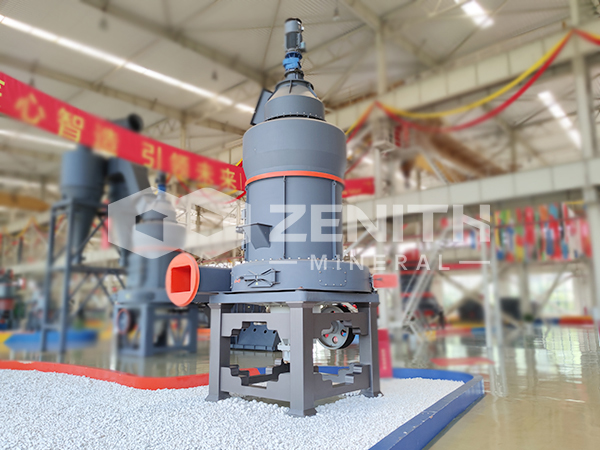
Based on decades of experience in petcoke grinding projects worldwide, Shanghai Zenith recommends two proven mill series for Pakistani industrial boiler applications: the LM Vertical Grinding Mill (Coal Mill Series) and the MTW Trapezium Grinding Mill. Both offer excellent reliability, low operating costs, and precise fineness control.
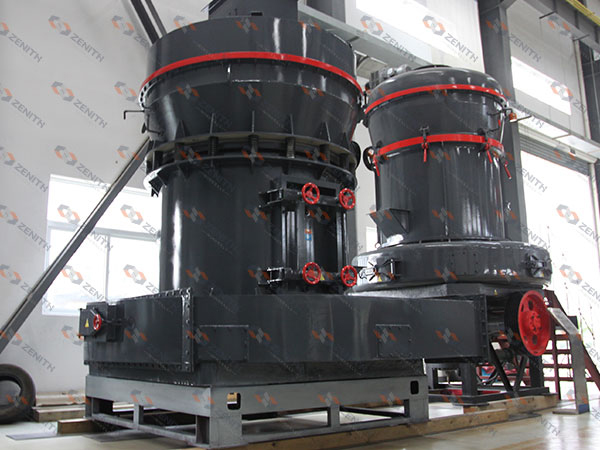
4.1 LM Vertical Grinding Mill (LM130M / LM220M)
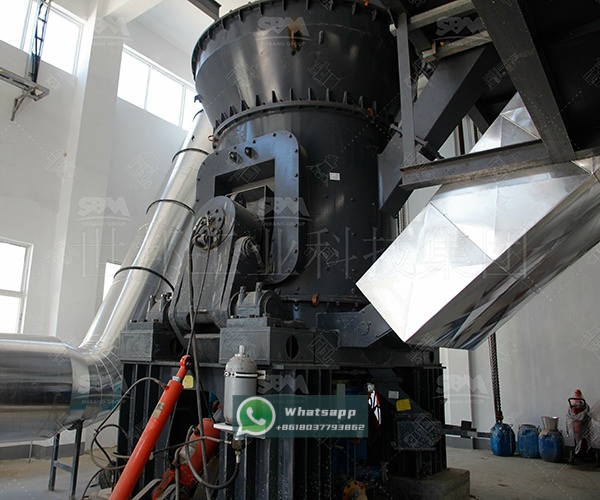
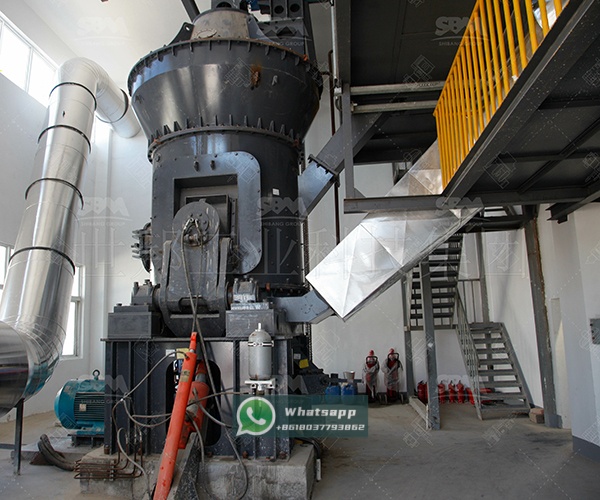
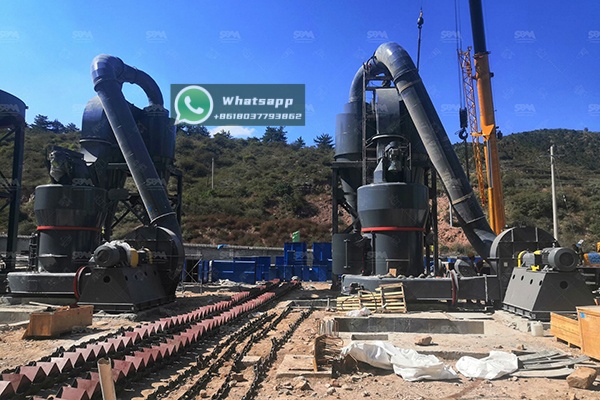
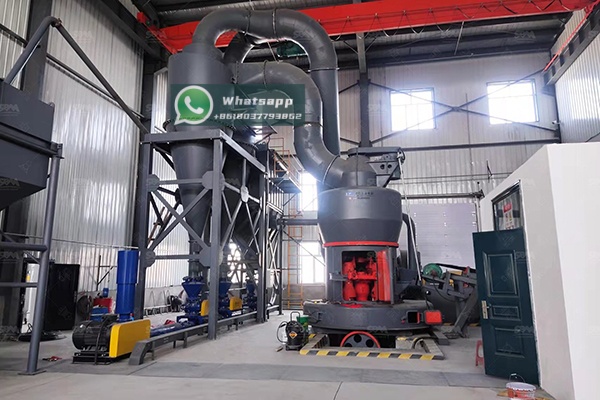
The LM series vertical mill is an integrated system that combines crushing, grinding, drying, and classification in a single unit. Its unique roller geometry and hydraulic loading system ensure stable operation even with abrasive materials like petcoke. The coal mill models (LM130M, LM220M, LM280M) are specifically designed for fuel grinding in boilers and kilns. Key advantages include:
- High drying capacity: Can handle incoming moisture up to 15% using hot air from the boiler or a separate heater.
- Narrow particle size distribution: The dynamic classifier produces a steep product size distribution, ideal for boiler combustion.
- Low metal wear: The grinding rollers and table are made of wear-resistant alloy; typical roller life exceeds 8000 hours for petcoke.
- Compact footprint: Occupies 50% less space compared to ball mill systems.
Example specifications for petcoke grinding with LM vertical mill:
| Model | Table Diameter (mm) | Capacity (t/h) | Feed Size (mm) | Product Fineness | Main Motor (kW) |
|---|---|---|---|---|---|
| LM130M | 1300 | 10–17 | <38 | 80% passing 200 mesh | 185 |
| LM220M | 2200 | 35–50 | <50 | 80% passing 200 mesh | 500 |
| LM280M | 2800 | 60–90 | <50 | 80% passing 200 mesh | 900 |
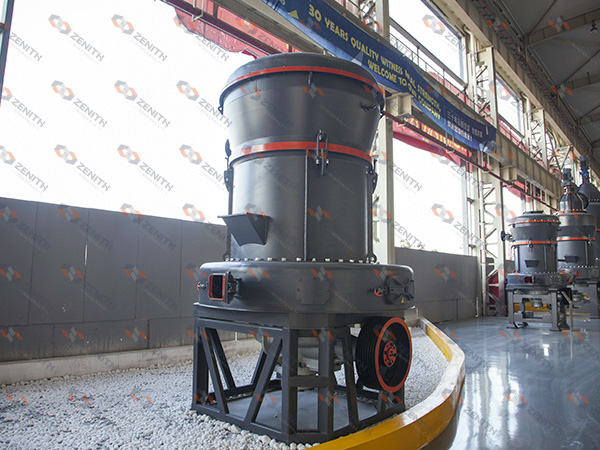
4.2 MTW Trapezium Grinding Mill (MTW138Z / MTW175G)
The MTW series is a multi-patented trapezium mill that offers an excellent alternative for medium-capacity lines (3–45 t/h). Its over-pressure trapezium grinding ring and curved shovel design increase grinding efficiency by 15–20% compared to traditional Raymond mills. For petcoke, the MTW mill is particularly suitable when the required fineness is 1.6–0.045 mm (10–325 mesh). The MTW175G model, with a capacity of 9.5–25 t/h and main motor of 160 kW, is a popular choice for Pakistani boiler plants requiring a balance between investment and operating cost.
Key benefits of MTW for petcoke:
- Low energy consumption: Per-ton power consumption is 20–30% lower than ball mills.
- Simple maintenance: The grinding roller can be swung out for easy replacement of wear parts.
- Eco-friendly: Equipped with a bag filter and pulse jet cleaning to meet strict emission standards.
- Quick fineness adjustment: The classifier speed can be adjusted to achieve various fineness levels (e.g., 80% passing 80 mesh for some boilers).
| Model | Max Feed Size (mm) | Final Size (mm) | Capacity (t/h) | Main Motor (kW) |
|---|---|---|---|---|
| MTW138Z | <35 | 1.6–0.045 | 6–17 | 90 |
| MTW175G | <40 | 1.6–0.045 | 9.5–25 | 160 |
| MTW215G | <50 | 1.6–0.045 | 15–45 | 280 |
5. Key Considerations for the Pakistani Market
When designing a petroleum coke milling line for Pakistan, several local factors must be addressed:
- Power supply stability: Many industrial areas face voltage fluctuations; Zenith’s mill drive systems include optional soft starters and VFDs to handle such conditions.
- High ambient temperatures: In summer, temperatures can exceed 45°C, affecting mill bearing lubrication and gearbox oil cooling. All Zenith mills are available with enhanced cooling systems for tropical climates.
- Local service support: Shanghai Zenith has established partnerships with dealers in Karachi and Lahore to provide spare parts and on-site technicians, reducing downtime.
- Raw material variability: Petcoke quality varies from different refineries (e.g., from Pak-Arab Refinery, National Refinery). A pre-feasibility test is recommended to optimize mill settings.
6. Conclusion
A well-designed petroleum coke milling line is essential for maximizing boiler efficiency and minimizing fuel costs in Pakistan’s industrial sector. Shanghai Zenith Machinery offers proven grinding solutions—from laboratory-scale to large industrial lines—tailored to the specific characteristics of petcoke and the local operating environment. Whether you choose the LM Vertical Grinding Mill for its high capacity and integrated drying, or the MTW Trapezium Grinding Mill for its cost-effectiveness and flexibility, our team provides complete engineering, installation, and after-sales support. We invite Pakistani boiler operators, EPC contractors, and fuel suppliers to contact us for a customized proposal and free material testing.
For more details, please visit our website or reach out to our regional office in Pakistan. Let us help you build a reliable, high-efficiency petroleum coke milling line that drives your productivity and profitability.
Want This Solution for Your Project?
Contact us for a customized quotation and technical proposal.
Interested in This Solution?
Send us a message and our engineers will get back to you within 24 hours.