Perlite Grinding Mill for Lightweight Aggregate: A Growing Need in South Africa
Perlite is a naturally occurring siliceous volcanic glass that has become one of the most valuable industrial minerals in the construction sector. In South Africa, demand for expanded perlite as a lightweight aggregate is increasing as cities densify, infrastructure projects multiply, and building energy efficiency standards become more stringent. Lightweight aggregate based on perlite is used in lightweight concrete, fireproof plaster, roofing boards, masonry blocks, underfloor insulation, and many other applications. Producing consistent, high-quality expanded perlite depends primarily on the quality of the raw perlite grinding process. A reliable perlite grinding mill is therefore at the heart of any successful lightweight aggregate project in South Africa.
Expanded perlite is not produced directly from run-of-mine ore. The ore must first be cleaned, milled, classified and sometimes dried. When the prepared perlite particles are heated to temperatures of roughly 800 to 1200 degrees Celsius, the combined water inside the glassy ore vaporises and creates thousands of tiny bubbles. The softened particle expands to many times its original volume and forms a white, porous, extremely lightweight aggregate. Its density can be low enough to allow impressive thermal and acoustic performance, while remaining chemically inert and non-combustible. These properties explain why South African builders, architects and construction material producers increasingly specify perlite-based lightweight aggregate in both commercial and residential projects.
Why Lightweight Aggregate Is Important in South Africa
South Africa has a fast-growing urban population, and the country’s built environment is adapting to new environmental standards and energy costs. Reducing the dead load of structures is one of the most effective ways to save material and construction cost. Lightweight aggregate from perlite can lower structural loading, reduce foundation requirements, and improve thermal insulation. In a climate where cooling and heating account for a large share of building energy use, the cellular structure of expanded perlite offers valuable thermal resistance.
Perlite lightweight aggregate also offers practical advantages for local construction. It is rot-proof, vermin-proof, naturally non-combustible and stable over time. It can be blended into cementitious mixes without chemically interfering with hydration, and its open-cell surface provides good bonding. South African aggregate producers and construction material companies are therefore investing in mineral processing lines able to convert local or imported perlite ore into a controlled lightweight aggregate product. The key to those processing lines is the perlite grinding mill, which must produce a stable, uniform feed fraction suitable for expansion.
Perlite Grinding and the Route to Lightweight Aggregate
In a complete perlite processing operation, the ore is first reduced by a jaw crusher or hammer crusher before being dried and ground. The grinding stage must carefully control particle size distribution. If the particles are too coarse, expansion is incomplete and the final aggregate remains dense and heavy. If the material is excessively fine, it may be lost with the hot gas stream during expansion or lead to an undesirable dust content in the aggregate. For this reason, a suitable perlite grinding mill must provide a high degree of fineness control, stable operation and good particle uniformity.
Different perlite lightweight aggregate end-uses require different feed sizes. Horticultural aggregates, loose-fill insulation, lightweight masonry blocks and perlite plasters each have their own target particle range. South African plant operators may need to change from one product specification to another without changing the entire process line. That requirement makes adjustability one of the most important features of any grinding mill selected for perlite aggregate production. The mill must have a well-designed classifier system, rapid fineness adjustment, and the capacity to maintain a consistent product even when raw ore properties vary.
Key Selection Criteria for a Perlite Grinding Mill in South Africa
Investing in a perlite grinding mill for lightweight aggregate in South Africa should take into account several site-specific factors. Electricity tariffs in South Africa have risen substantially, and grinding is one of the most energy-intensive stages in the processing chain. Energy efficiency is therefore critical. Equipment reliability is equally important because any unplanned stop can disrupt the expansion furnace and cause severe production loss. Local service support, wear-part life and the ability to handle abrasive glassy perlite ore must also be evaluated carefully.
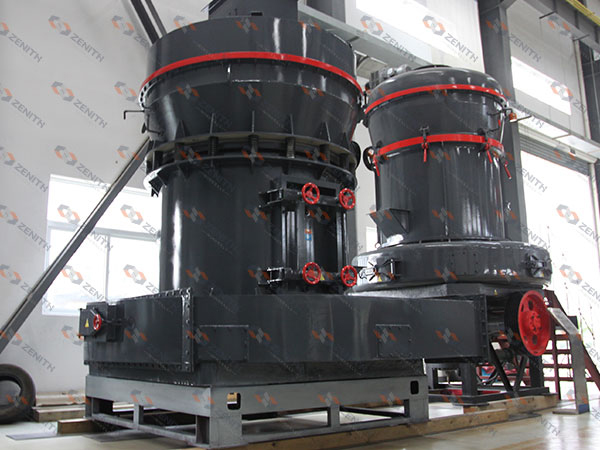
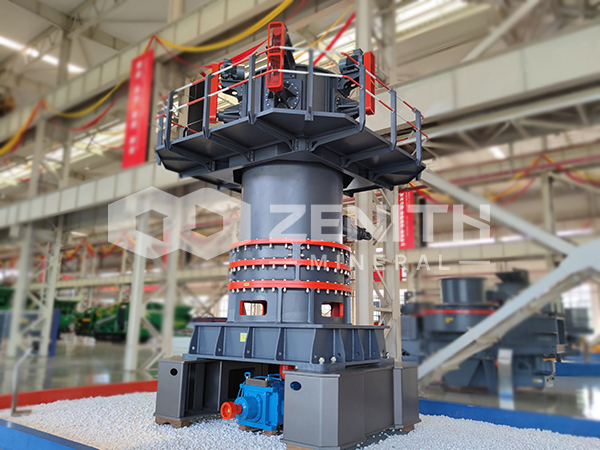
A professional grinding equipment manufacturer can help reduce these risks. Shanghai Zenith Machinery Co., Ltd. is an excellent manufacturer of ore grinding equipment in China and has accumulated extensive experience in the field of industrial powder processing. Zenith is specialized in the research, development and production of grinding mills and related equipment. Its product range includes MTW Trapezium Grinding Mill, Hammer Mill, Ball Mill, MTM Medium-Speed Grinding Mill, Raymond Mill, LM Vertical Grinding Mill, LUM Ultrafine Vertical Mill and XZM Ultrafine Grinding Mill. For perlite lightweight aggregate producers, two Zenith product families are especially relevant.
Recommended Products from Shanghai Zenith
MTW Trapezium Grinding Mill
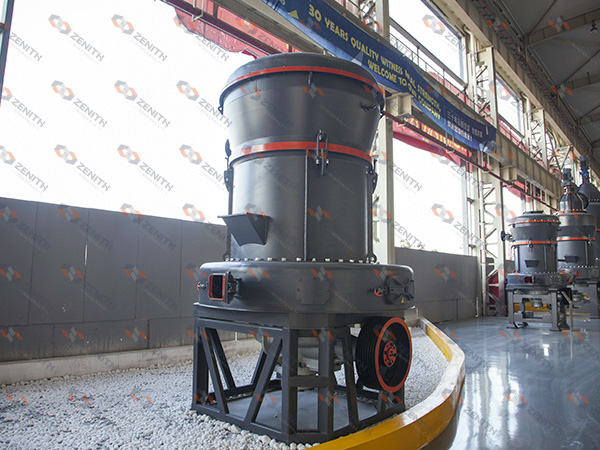
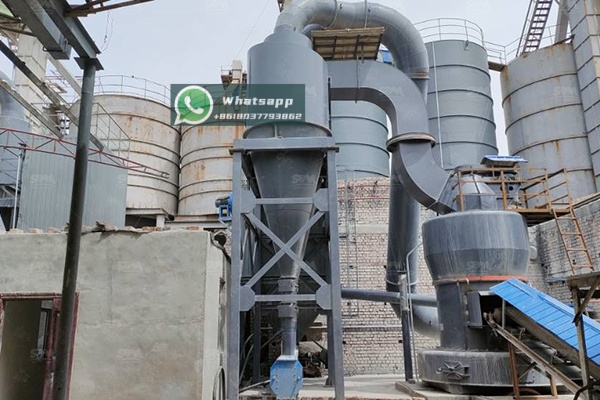
For most South African perlite aggregate projects, the MTW Trapezium Grinding Mill is the first recommendation. This patented Zenith mill has a compact structure, long service life, low operating cost and an environmentally friendly design. It is suitable for raw perlite feed sizes of up to 50 mm and can produce a final product in the range of 1.6 mm to 0.045 mm, which covers the typical pulverised perlite feed fractions used before the expansion furnace. The table below shows key parameters of selected MTW models:
| Model | Max Feed Size | Final Product Size | Capacity | Main Motor |
|---|---|---|---|---|
| MTW110Z | <30 mm | 1.6-0.045 mm | 3-10 t/h | 55 kW |
| MTW138Z | <35 mm | 1.6-0.045 mm | 6-17 t/h | 90 kW |
| MTW175G | <40 mm | 1.6-0.045 mm | 9.5-25 t/h | 160 kW |
| MTW215G | <50 mm | 1.6-0.045 mm | 15-45 t/h | 280 kW |
The MTW Trapezium Grinding Mill uses a bevel-gear integral transmission, which improves transmission efficiency and reduces energy loss. The grinding roller and grinding ring are manufactured from high-wear-resistant materials, which is especially valuable when processing glassy perlite ore. Equipped with a variable-pitch powder classifier, the mill allows operators to adjust fineness smoothly within a wide range. This makes it easy to respond to changes in end-product specifications or furnace requirements.
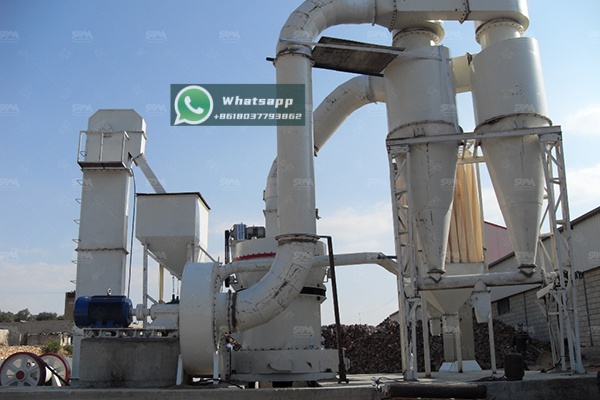
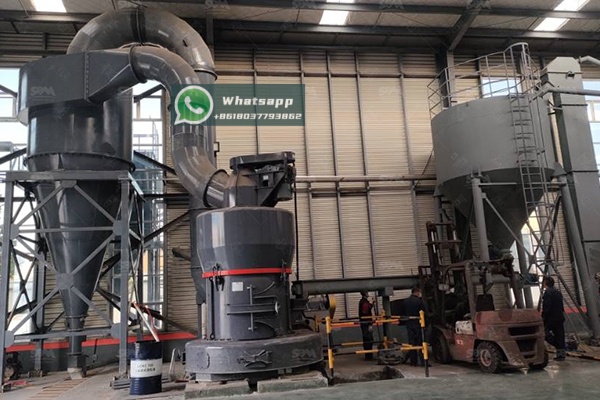
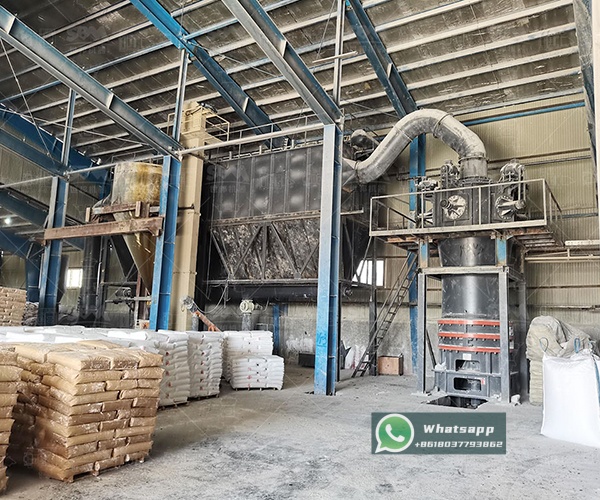
For lightweight aggregate producers in South Africa, the MTW mill can be installed in a complete line with a jaw crusher, bucket elevator, feed bin, dust collector and expansion furnace. It can be configured for medium and large production capacities. Its enclosed, negative-pressure operation reduces dust emission and creates a safer working environment. Maintenance procedures are straightforward, and replacement parts are designed for quick access. As a result, the MTW Trapezium Grinding Mill offers the combination of efficiency, reliability and product flexibility preferred by modern perlite processing plants.
LM Vertical Grinding Mill
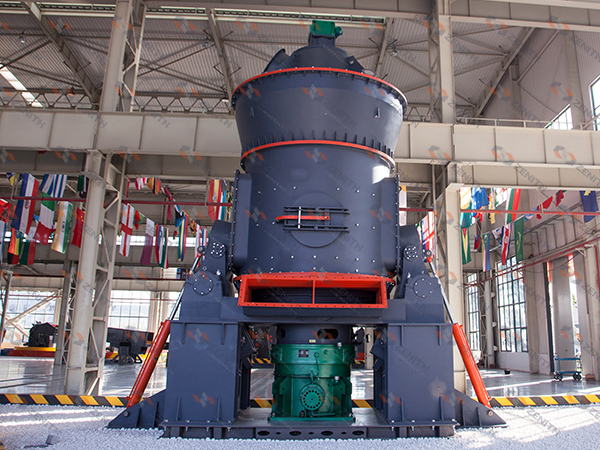
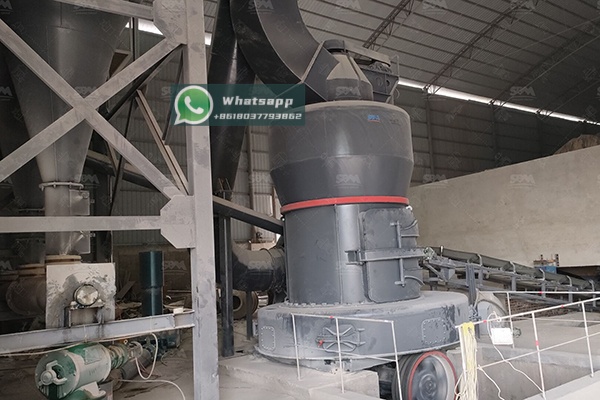
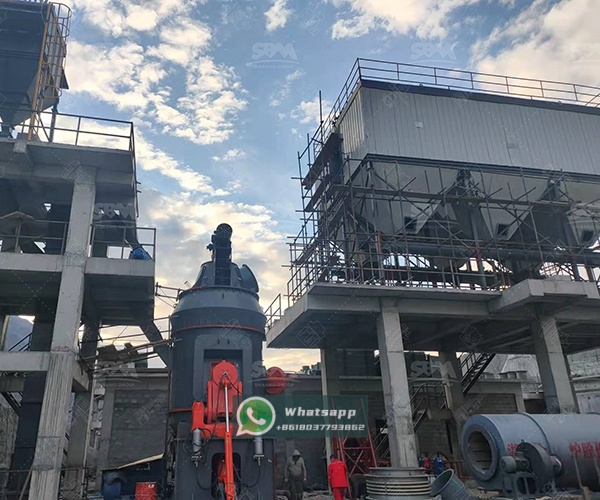
For producers planning high-capacity South African perlite grinding operations, the LM Vertical Grinding Mill is a proven alternative. The LM vertical mill integrates five functions in one machine: crushing, grinding, powder selection, drying and material conveying. Perlite ore often contains some surface moisture, and the LM mill can use hot gas to dry material inside the grinding chamber. This simplifies the process flow and reduces the equipment floor area required in a plant. Models such as LM130K, LM190K and LM280K provide capacities from about 10 t/h to 170 t/h, depending on the exact specification and material characteristics.
The LM Vertical Grinding Mill is also designed for lower energy consumption and finer particle classification. This can be advantageous when the lightweight aggregate project also produces perlite powder for other high-value applications such as gypsum plaster, board fillers, insulation additives or ceramic industries. Because the LM mill has a smaller occupational area than a traditional ball mill system, its installation cost and civil engineering workload are lower. Its integrated classifier is easy to adjust, and the mill can be operated automatically, helping South African clients control production quality with less manual supervision.
Conclusion: Building the Right Perlite Grinding Solution in South Africa
The potential for perlite lightweight aggregate in South Africa is clear. As the construction industry continues to search for materials that are lighter, safer, more thermally efficient and more sustainable, expanded perlite will play a more prominent role in lightweight aggregate mixes. However, expansion is only successful if the perlite ore is ground correctly before entering the furnace. A stable feed size, controlled classifier performance and efficient grinding process are essential to maximise expansion yield and minimise product variability.
Shanghai Zenith Machinery Co., Ltd. has the equipment, engineering knowledge and global project experience to support South African perlite processors. The MTW Trapezium Grinding Mill is especially well suited for most lightweight aggregate lines, while the LM Vertical Grinding Mill provides an integrated, large-capacity alternative. Both product families are designed to lower operating cost, extend equipment life and deliver the consistent powder quality that perlite expansion demands. For a professional and sustainable perlite grinding mill for lightweight aggregate in South Africa, Zenith equipment represents a reliable investment in future production capacity.
Key Equipment
Want This Solution for Your Project?
Contact us for a customized quotation and technical proposal.
Interested in This Solution?
Send us a message and our engineers will get back to you within 24 hours.