Introduction
Namibia’s construction industry is undergoing a significant expansion, driven by government infrastructure investment, urban development, and private-sector building projects. Roads, bridges, schools, hospitals, and residential complexes are creating robust demand for processed limestone products. Limestone powder is a vital ingredient in cement, lime, concrete, and asphalt filler, making an efficient limestone milling line essential for construction material suppliers in Namibia. Shanghai Zenith Machinery Co., Ltd. is an excellent manufacturer of ore grinding equipment in China, with years of experience and advanced technology in the field of powder processing. We specialize in the research, development, and production of industrial powder grinding equipment, offering a complete range of mills that can handle limestone with outstanding efficiency and reliability.
A well-designed limestone milling line must balance capacity, fineness, energy consumption, and environmental compliance. This article explains how Zenith’s grinding mills meet Namibia’s construction demand and why our equipment is the preferred choice for limestone processing projects.
The Role of Limestone Powder in Modern Construction
Limestone is a sedimentary rock composed mainly of calcium carbonate. In construction, it is used as a raw material for cement clinker, as an aggregate in concrete, as a filler in asphalt, and as a base material for road construction. When finely ground, limestone powder improves the workability, density, and durability of concrete. It also serves as a cost-effective replacement for clinker in blended cement, helping producers lower costs and reduce CO2 emissions. In Namibia, where infrastructure quality is a top priority, consistent limestone powder with controlled fineness is required. Grinding mills must therefore be robust, precise, and capable of continuous operation under demanding conditions.
Key Factors in Designing a Limestone Milling Line
Selecting the right limestone milling line depends on several factors. The first is raw material characteristics, including moisture content, hardness, and feed size. Limestone typically has a hardness of 3 to 4 on the Mohs scale and a moisture content below 10 percent, which makes it suitable for roller grinding and vertical milling. The second factor is required output fineness. For cement production, a fineness of 80 micrometers or 200 mesh is common, while for lime kiln feed and filler applications, different specifications may apply. The third factor is capacity. A construction-driven limestone mill in Namibia may need anywhere from 10 to 50 tons per hour. Finally, energy efficiency and environmental protection are critical. Dust emissions and power consumption must be minimized to comply with regulations and reduce operating costs.
Shanghai Zenith’s grinding equipment addresses all these factors. Our mills feature intelligent controls, compact footprints, and built-in dust collection systems. This makes them ideal for the semi-arid Namibian environment, where water conservation and energy efficiency are especially important.
Recommended Product One: MTW Trapezium Grinding Mill
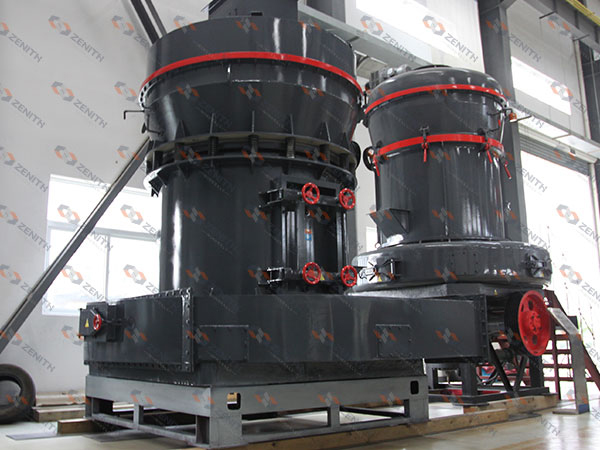
For medium-to-large scale limestone powder production, the MTW Trapezium Grinding Mill is an excellent choice. This mill has multiple patents and is known for its compact structure, long service life, and eco-friendly design. It can process materials with a maximum feed size of up to 50 millimeters and deliver final powder with a fineness ranging from 1.6 millimeters to 0.045 millimeters, equivalent to 325 mesh. The MTW mill uses a bevel gear system, thin oil lubrication, and a curved air duct, all of which improve efficiency and reduce maintenance.
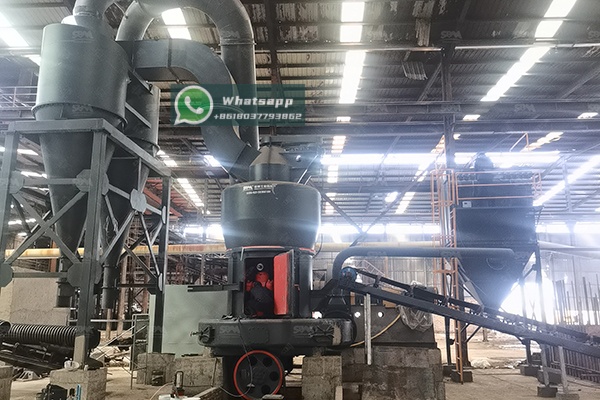
The table below shows the main parameters of the MTW series for limestone milling.
| Model | Max Feed Size (mm) | Final Size (mm) | Capacity (t/h) | Main Motor (kW) |
|---|---|---|---|---|
| MTW110 | <30 | 1.6-0.045 | 3-9 | 55 |
| MTW138Z | <35 | 1.6-0.045 | 6-17 | 90 |
| MTW175G | <40 | 1.6-0.045 | 9.5-25 | 160 |
| MTW215G | <50 | 1.6-0.045 | 15-45 | 280 |
For a typical Namibia construction material plant, the MTW175G or MTW215G can supply enough limestone powder for cement and concrete production. The MTW series also offers a lower installation height, greater crushing capacity, and a more compact layout, which is beneficial when site space is limited. With an output fineness down to 0.045 mm, the MTW mill easily meets the standard requirements of construction-grade limestone powder.
Recommended Product Two: LM Vertical Grinding Mill
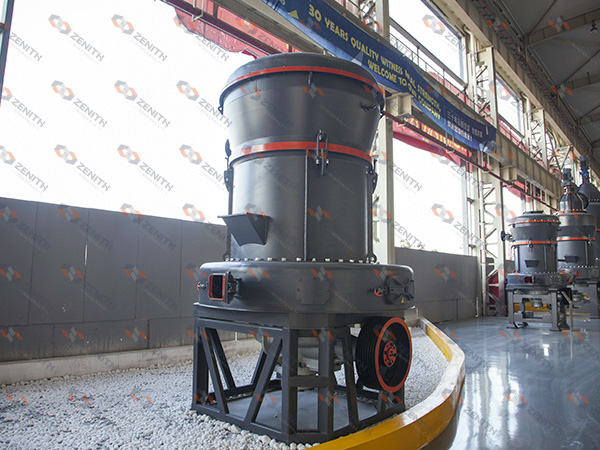
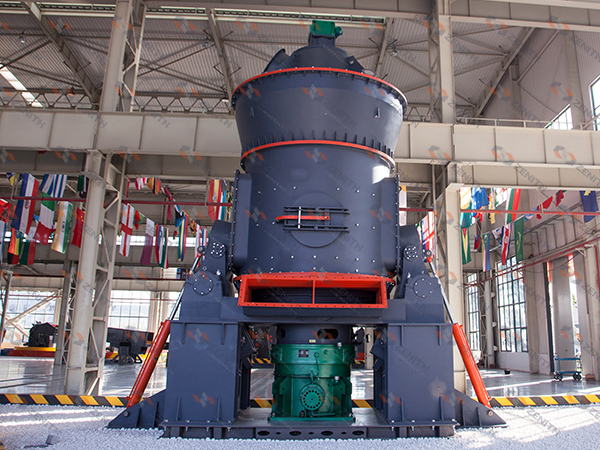
When larger capacity and more flexible operation are needed, the LM Vertical Grinding Mill is an outstanding solution. It integrates five functions—crushing, grinding, powder selection, drying, and material conveying—into a single machine. This greatly reduces the footprint of the milling line and simplifies process flow. The LM vertical mill is also designed for low energy consumption and high drying efficiency, making it suitable for limestone with slight surface moisture. It produces final powder with fineness between 170 and 40 micrometers, which is equivalent to 90 to 400 mesh.
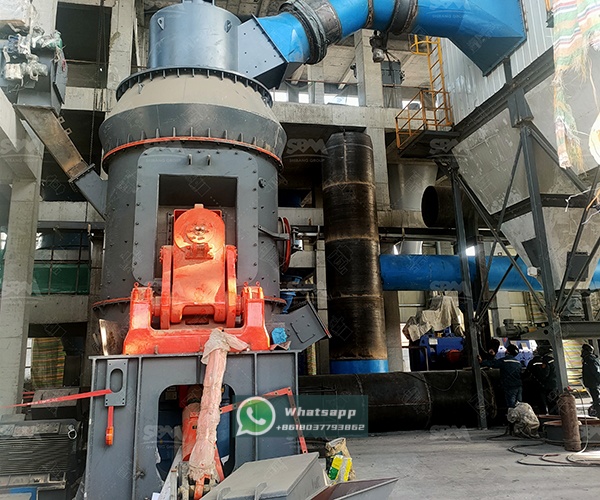
The LM series has several subcategories, including the mineral mill series, coal mill series, slag mill series, and fine-powder mill series. For limestone construction powder, the LM130K, LM190K, and LM280K models are among the most popular.
| Model | Plate Diameter (mm) | Capacity (t/h) | Output Fineness (μm) | Max Feed Size (mm) | Main Motor (kW) |
|---|---|---|---|---|---|
| LM130K | 1300 | 10-28 | 170-40 | <38 | 200 |
| LM190K | 1900 | 23-68 | 170-40 | <45 | 500 |
| LM280K | 2800 | 50-170 | 170-45 | <50 | 1250 |
For high-capacity cement additive production in Namibia, the LM190K is a balanced choice because it delivers 23 to 68 tons per hour while maintaining a compact vertical arrangement. The LM280K is suitable for large centralized mineral processing centers. The LM vertical mill also has a built-in classifier, which ensures a steep particle size distribution and stable product quality. This is critical for concrete and cement applications where consistency affects structural performance.
Why Choose Shanghai Zenith Machinery
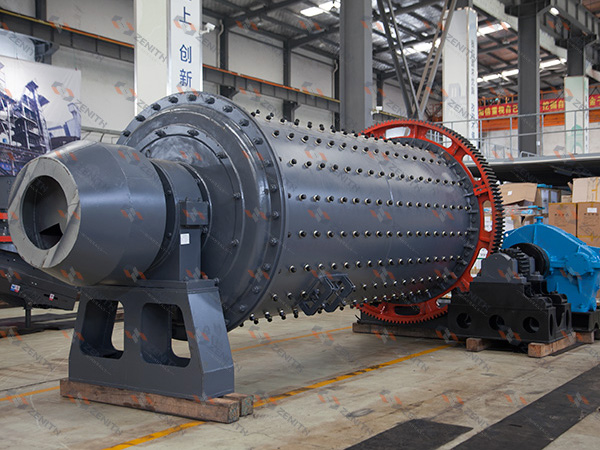
Shanghai Zenith Machinery Co., Ltd. is an excellent manufacturer of ore grinding equipment in China and has achieved remarkable progress in the field of ultra-fine powder grinding. Our company is specialized in the research, development, and production of industrial powder grinding equipment, including MTW Trapezium Grinding Mill, Ball Mill, MTM Medium-Speed Grinding Mill, Raymond Mill, LM Vertical Grinding Mill, LUM Ultrafine Vertical Mill, XZM Ultrafine Grinding Mill, and Hammer Mill. This broad product portfolio allows us to configure the most suitable limestone milling line for each customer’s specific needs.
Zenith’s mills are known for high efficiency, low energy consumption, easy maintenance, and long service life. We provide complete pre-sales and after-sales support, from site survey and process design to equipment installation, commissioning, and staff training. For Namibia’s construction industry, we can deliver a turnkey limestone milling line that meets local demand and operates reliably in the local climate. Our equipment also helps customers reduce carbon emissions and operational downtime, supporting sustainable construction practices.
Typical Limestone Milling Process Flow
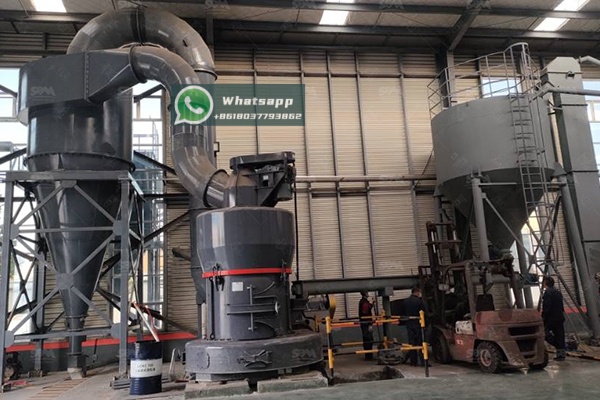
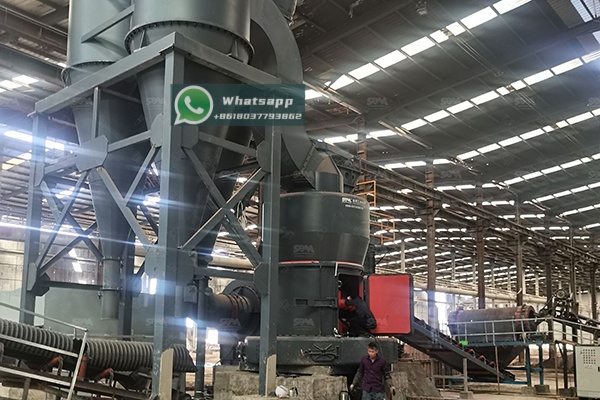
A standard limestone milling line designed by Zenith includes primary crushing, feeding, grinding, classifying, and collection. Large limestone blocks are first crushed by a jaw crusher or hammer crusher to a size smaller than the mill’s maximum feed size. Then, a bucket elevator and vibrating feeder transport the crushed material into the grinding mill. Inside the mill, rollers or grinding rings process the limestone into fine powder. The built-in classifier separates qualified powder and returns oversized particles for further grinding. Finally, a bag filter collects the finished powder, while the clean air is discharged through the fan.
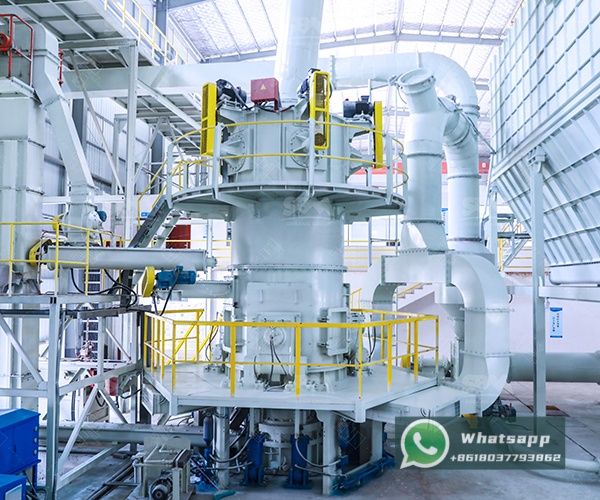
This compact process is suitable for Namibia’s construction material plants because it requires less civil engineering and can be installed quickly. The use of a vertical mill or trapezium mill reduces the number of auxiliary equipment, lowering capital investment and energy costs. In addition, the system can be optimized for either continuous production of limestone powder or intermittent operation according to market needs.
Conclusion
Namibia’s construction demand requires a dependable and efficient limestone milling line. Shanghai Zenith Machinery offers the MTW Trapezium Grinding Mill and LM Vertical Grinding Mill as the core equipment to produce high-quality limestone powder. With capacities ranging from 3 to 170 tons per hour and fineness down to 40 micrometers, our machines are flexible enough to support cement plants, lime producers, and building material suppliers. To build a successful limestone powder manufacturing business in Namibia, choosing the right grinding equipment is essential. Zenith’s advanced technology, robust design, and professional service ensure that your investment will deliver lasting value. Contact us today for a customized limestone milling solution tailored to your project’s requirements.
Want This Solution for Your Project?
Contact us for a customized quotation and technical proposal.
Interested in This Solution?
Send us a message and our engineers will get back to you within 24 hours.