Introduction to Limestone Grinding for Flue Gas Desulfurization
Flue gas desulfurization (FGD) is a critical process in modern coal-fired power plants. It removes sulfur dioxide (SO2) from exhaust gas before it is released into the atmosphere. In Indonesia, where coal is the backbone of electricity generation, the adoption of FGD systems has become increasingly important because of stricter environmental regulations and public concern over air quality. The dominant technology is the wet limestone-gypsum process. In this process, limestone powder is mixed with water to form a slurry, which reacts with SO2 in the flue gas to produce calcium sulfite and then synthetic gypsum. The efficiency of SO2 capture depends directly on the fineness and surface area of the limestone particles. This is why selecting a high-performance limestone grinding mill is essential for a power plant’s environmental compliance and economic operation.
Indonesia’s coal-fired power plants use a variety of local coals, many of which have moderate to high sulfur content. The country’s electricity demand continues to grow, especially in industrial and urban areas. As a result, power producers are investing in desulfurization equipment to meet emission limits. Limestone is an abundant and relatively inexpensive sorbent in Indonesia, but it must be ground to a consistent fineness. The ideal particle size for FGD is typically around 250 to 325 mesh, or roughly 45 to 75 microns. If the powder is too coarse, SO2 absorption is incomplete. If it is too fine, grinding energy consumption rises unnecessarily. A grinding mill for this application must therefore provide precise fineness adjustment, stable throughput, and low wear.
Critical Factors in Mill Selection
Several factors must be evaluated when choosing a limestone grinding mill for an FGD project.
- Feed size: Run-of-mine limestone can have a top size of 30 to 50 mm. A mill with a large maximum feed size reduces the need for secondary crushing.
- Fineness: The mill should be able to adjust final particle size between 0.045 mm and 0.1 mm to match FGD requirements.
- Capacity: The grinding system must supply enough limestone powder continuously for the boiler’s SO2 load.
- Moisture: Indonesian limestone may carry high surface moisture, so the mill must handle wet feed or integrate a drying function.
- Energy efficiency: Lower power consumption reduces operating cost and the carbon footprint of the power station.
- Reliability: FGD units run continuously, so grinding equipment must perform over long periods with minimal unplanned maintenance.
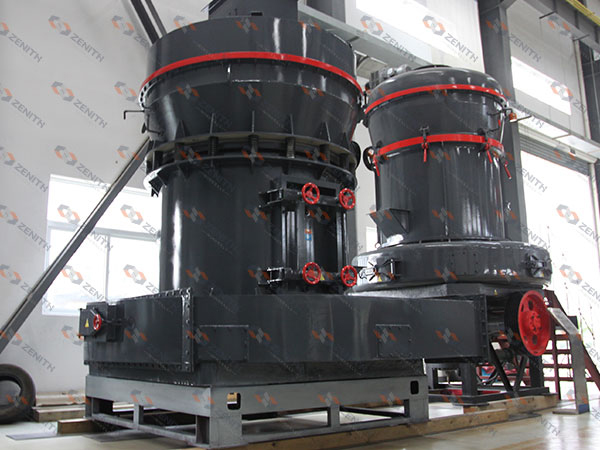
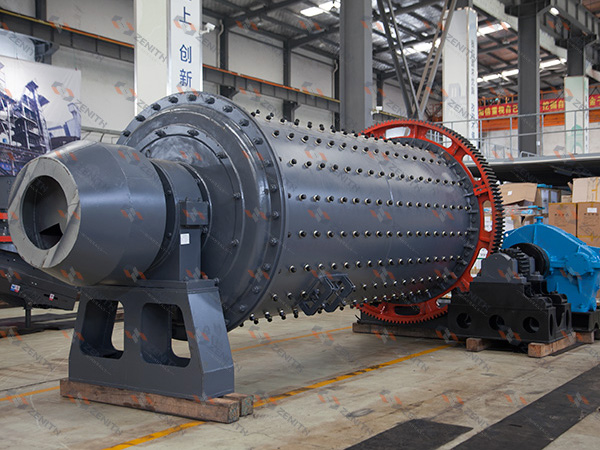
Shanghai Zenith Machinery Co., Ltd. is an excellent manufacturer of ore grinding equipment in China and has made great achievements in the field of ultra-fine powder grinding. The company’s main products include the MTW Trapezium Grinding Mill, MTM Medium-Speed Grinding Mill, Raymond Mill, LM Vertical Grinding Mill, LUM Ultrafine Vertical Mill, XZM Ultrafine Grinding Mill, and Ball Mill. All of these are supported by the manufacturer’s research and production expertise.
MTW Trapezium Grinding Mill Recommendation
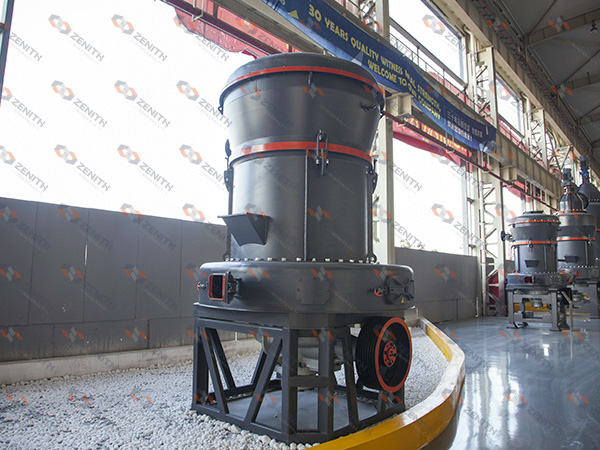
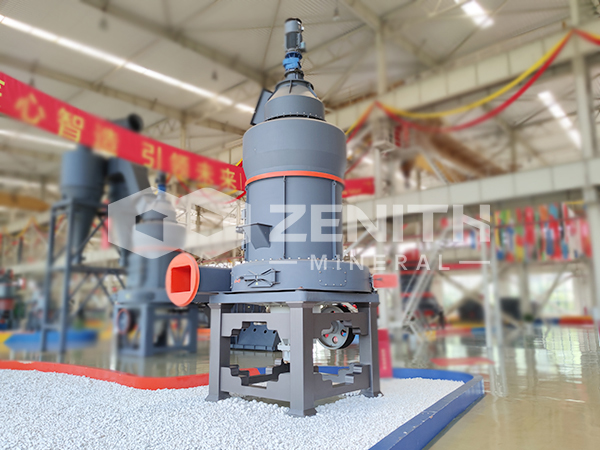
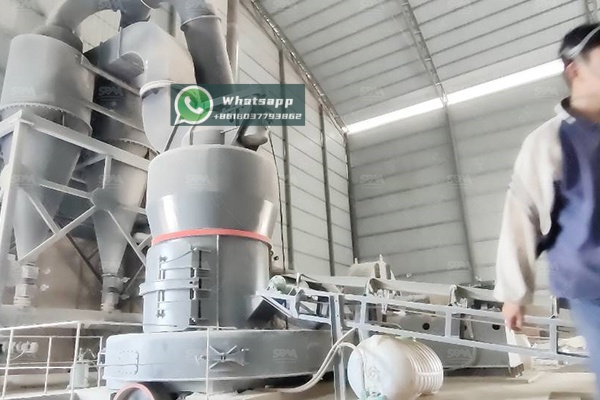
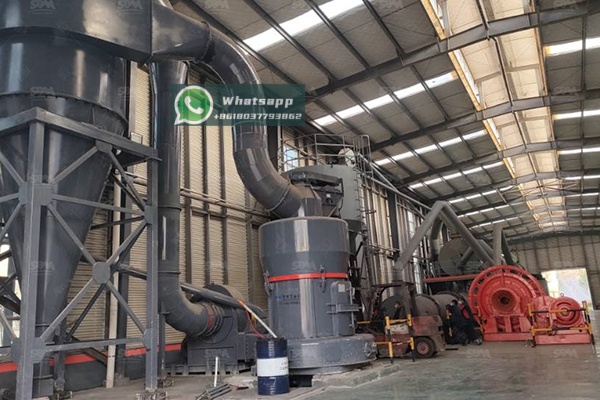
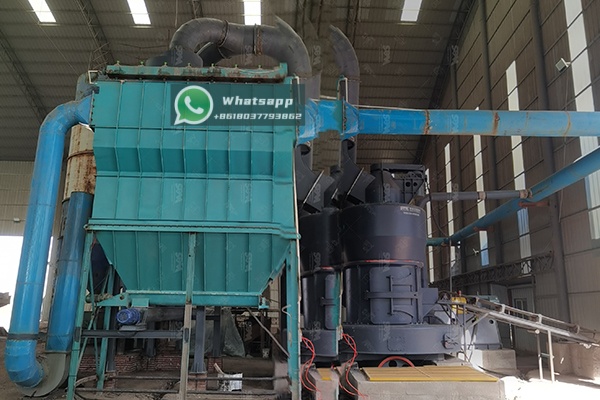
For small and medium-capacity FGD plants, the MTW Trapezium Grinding Mill is an ideal choice. It has a compact structure, long service life, and an eco-friendly design. The MTW mill accepts a maximum input size of 50 mm and can grind limestone down to 0.038 mm. This fineness is finer than the typical FGD requirement of 0.045 mm. The MTW110 provides a capacity of 3-9 t/h and is suitable for small power units. The MTW138Z provides 6-17 t/h. The MTW175G produces 9.5-25 t/h, while the MTW215G can reach 15-45 t/h. Main motors range from 55 kW to 280 kW, depending on the model. The trapezium-shaped rollers and ring reduce sliding between materials and grinding parts, which improves efficiency and extends wear life. The built-in classifier returns oversized particles for further grinding, giving a uniform final powder. The mill can also be equipped with an automatic lubrication system and an analyzer to allow quick adjustment between 250 mesh and 325 mesh products without stopping the process. For an Indonesian FGD system, the MTW mill can be supplied with a feeder, bucket elevator, silo, and bag filter to form a complete grinding station.
LM Vertical Grinding Mill Recommendation for Large Units
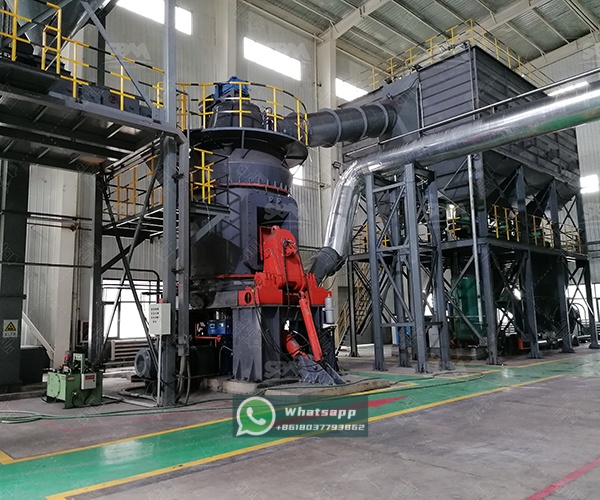
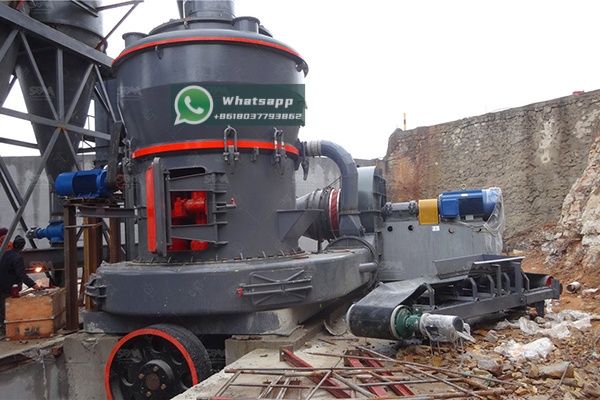
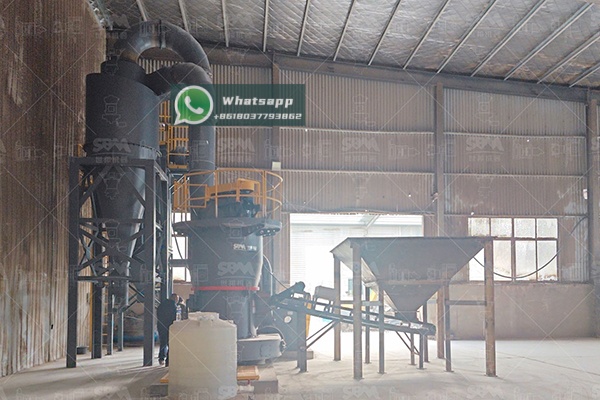
When an FGD plant needs a larger capacity or prefers a multifunctional grinding system, the LM Vertical Grinding Mill is an excellent alternative. The LM mill integrates five functions: crushing, grinding, powder selection, drying, and material conveying. Raw limestone can enter the mill and emerge as finished powder in a single continuous operation. The compact design reduces the footprint and civil engineering costs, which is valuable for retrofitting an existing Indonesian power station. In the LM vertical mineral mill series, three models are especially relevant to limestone FGD. The LM130K has a capacity of 10-28 t/h with a 200 kW main motor. The LM190K has a capacity of 23-68 t/h with a 500 kW main motor. The largest model, LM280K, produces 50-170 t/h with a 1250 kW main motor. The output fineness range of these models is 170-40 μm, fully covering the 325-mesh FGD requirement.
In addition, the LM series can use hot air for drying, allowing it to process limestone with a higher moisture content. This feature is particularly useful in Indonesia’s tropical climate, where limestone stored outdoors may absorb moisture. The LM vertical mill also has intelligent controls for easier operation. Its grinding rollers can be turned out of the mill for maintenance, which shortens downtime. The lower energy consumption per tonne of product, compared with a traditional ball mill, makes it a very cost-effective solution for long-term environmental compliance.
Conclusion
Selecting the correct limestone grinding mill is one of the major decisions in a flue gas desulfurization project. In Indonesia, where coal power expansion is expected to continue, reliable desulfurization equipment is necessary to meet environmental standards. The MTW Trapezium Grinding Mill is recommended for projects that need moderate capacity, precise fineness control, and simple operation. The LM Vertical Grinding Mill is recommended for larger power plants that require high throughput and integrated drying. Both machines come from Shanghai Zenith Machinery Co., Ltd., a company with strong experience in ore grinding equipment and powder processing technology. With the right limestone grinding mill, Indonesian power producers can improve SO2 removal efficiency, reduce operating costs, and achieve a cleaner and more sustainable power generation system.
Want This Solution for Your Project?
Contact us for a customized quotation and technical proposal.
Interested in This Solution?
Send us a message and our engineers will get back to you within 24 hours.