Introduction
Ethiopia is investing in water purification, beverage production, edible oil refining, sugar processing, and pharmaceutical manufacturing. These industries rely on filtration aids to remove suspended solids, colloids, and unwanted color from liquids. Diatomite, also known as diatomaceous earth or DE, is one of the most effective filtration aids because of its high porosity, large surface area, chemical inertness, and ability to form a stable filter cake. To convert raw diatomite ore into a marketable filtration aid, producers need carefully controlled crushing, drying, calcination, classification, and grinding. A reliable diatomite grinding mill is therefore at the heart of every efficient DE processing plant. In Ethiopia, where demand for clean water and high-quality processed food is rising, investing in advanced diatomite grinding technology can create strong local value.
Why Diatomite Is Used as a Filtration Aid
Diatomite consists of fossilized skeletal remains of diatoms, microscopic algae with silica cell walls. The natural structure contains countless microscopic pores and channels. When diatomite powder is added to a liquid stream before a filter septum, it forms a permeable filter cake. This cake traps fine impurities while allowing the liquid to pass at high flow rates. It is widely used in beer, wine, fruit juice, edible oil, syrup, vinegar, pharmaceuticals, swimming pools, industrial water, and wastewater treatment.
Critical Properties for Filtration Performance
- High porosity: creates high permeability and long filtration cycles.
- Large specific surface area: captures fine suspended particles.
- Controlled particle size distribution: balances clarity, flow rate, and cake stability.
- Chemical stability: resists attack by acids, alkalis, and organic liquids.
- Low soluble impurities: protects product taste, odor, and quality.
- Consistent bulk density and brightness: supports repeatable filtration results.
Because filtration aids are graded by permeability and particle size, diatomite processors must produce several product ranges, from coarse filter aids for fast flow to fine grades for high clarity. This flexibility depends on the grinding and classification circuit.
Diatomite Resources and Market Potential in Ethiopia
Ethiopia has promising diatomite occurrences, especially in the Rift Valley regions. Although the country is not yet a major global DE producer, local deposits offer an opportunity to substitute imported filtration aids and serve regional markets such as Kenya, Djibouti, Sudan, and South Sudan. The growing Ethiopian beverage industry, including breweries and soft-drink plants, as well as edible oil refineries and municipal water projects, requires reliable filtration media. Local production can reduce logistics costs, shorten supply chains, and create jobs.
To compete with imported products, Ethiopian diatomite processors need efficient equipment that can achieve consistent fineness, low energy consumption, and high capacity. Simple hammer mills or outdated Raymond mills may struggle with the hardness, abrasiveness, and required size distribution of calcined diatomite. Modern industrial grinding mills with integrated classification and dust collection are far more suitable.
Grinding Requirements for Filtration-Grade Diatomite
Raw diatomite is first crushed, dried, and sometimes calcined with or without flux. Calcination burns off organic matter, increases silica content, whitens the product, and enlarges pores. After calcination, the material must be ground and classified to meet target particle size distributions. Filtration aid grades are often specified by median particle size, permeability, and the amount of fines. Typical fine filtration grades can range from approximately 5 to 45 microns, while coarser grades may be 45 microns or larger.
Particle Size and Permeability
If the powder is too coarse, the filter cake may allow fine impurities to pass, reducing clarity. If it is too fine, the cake can become dense and reduce flow rate, causing high pressure drop and short filtration cycles. Therefore, a grinding mill for diatomite filtration aid must provide adjustable fineness, narrow particle size distribution, and minimal contamination. The mill should also handle the abrasive nature of calcined silica while maintaining stable output.
Moisture, Dust, and Product Purity
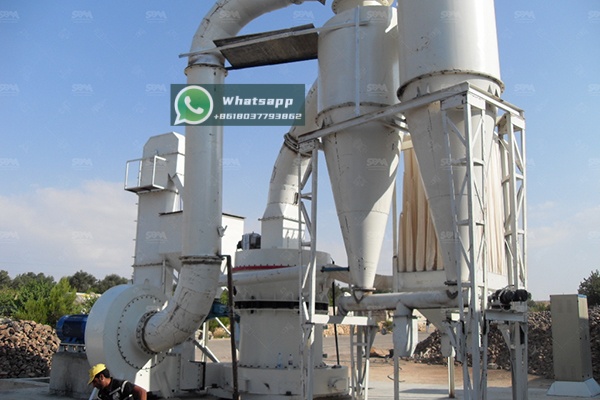
Diatomite dust can be harmful if inhaled, so enclosed grinding systems, bag filters, and negative pressure operation are essential. Moisture control also matters because wet diatomite can clog mills and classifiers. An integrated drying-grinding system, such as a vertical mill, can be advantageous, but for many filtration grades a precision pendulum mill or ultrafine mill with external drying and classification is highly effective.
Recommended Zenith Grinding Mills for Ethiopian Diatomite Filtration Aid
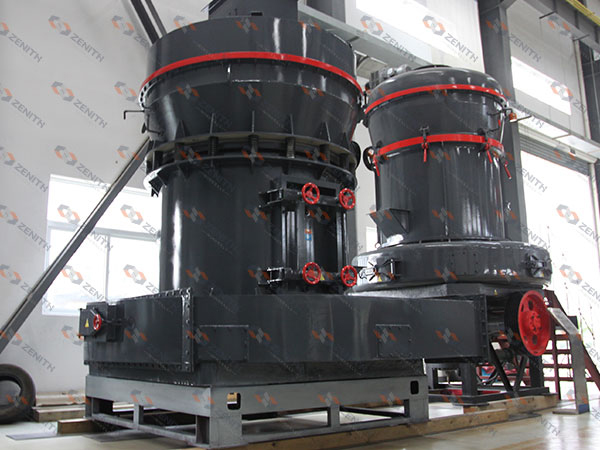
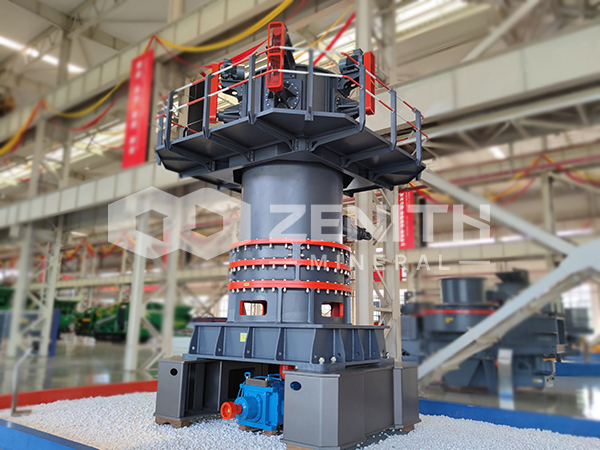
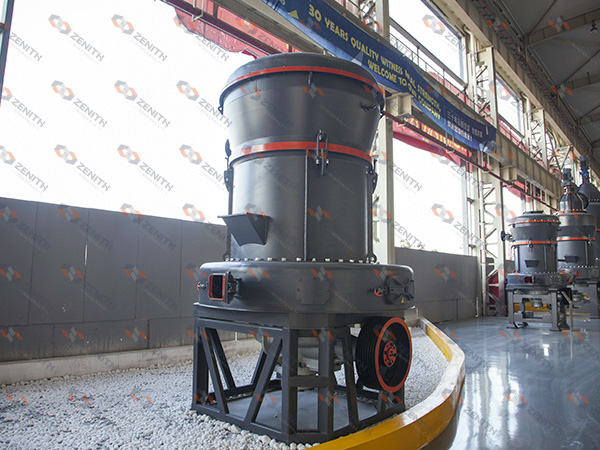
Shanghai Zenith Machinery Co., Ltd. is an excellent manufacturer of ore grinding equipment in China and has made great achievements in the field of ultra-fine powder grinding. The company specializes in research, development, and production of industrial powder grinding equipment. For diatomite filtration aid production in Ethiopia, two Zenith mills are especially suitable: the MTW Trapezium Grinding Mill and the XZM Ultrafine Grinding Mill.
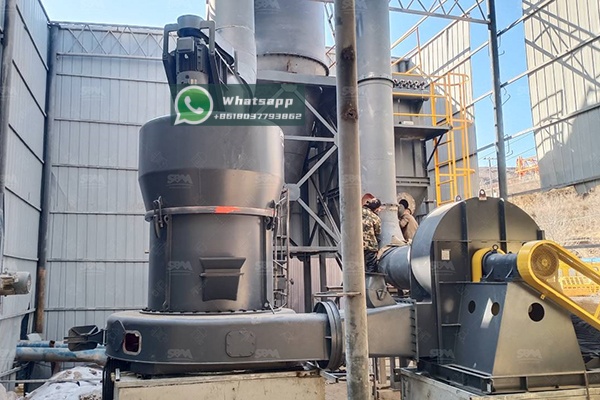
MTW Trapezium Grinding Mill: Flexible Medium-to-Fine Production
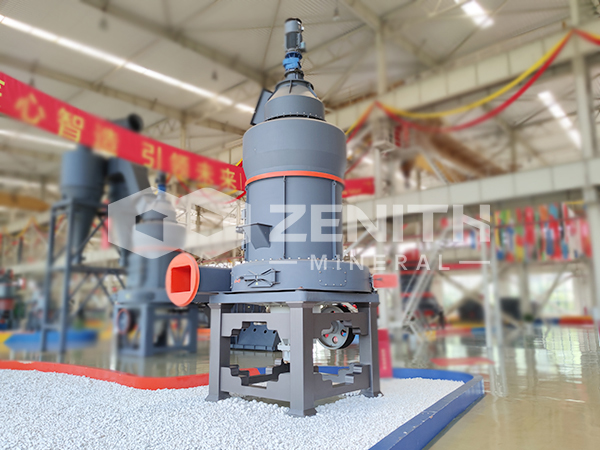
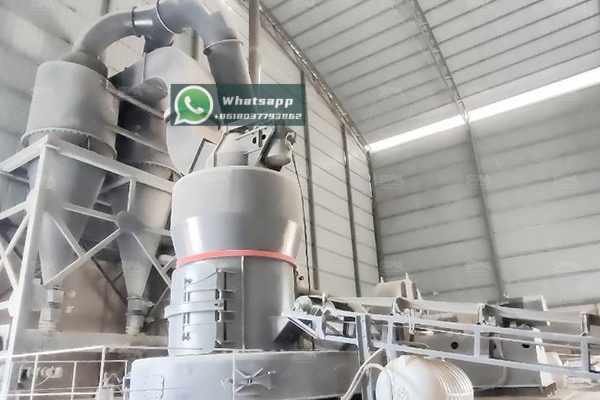
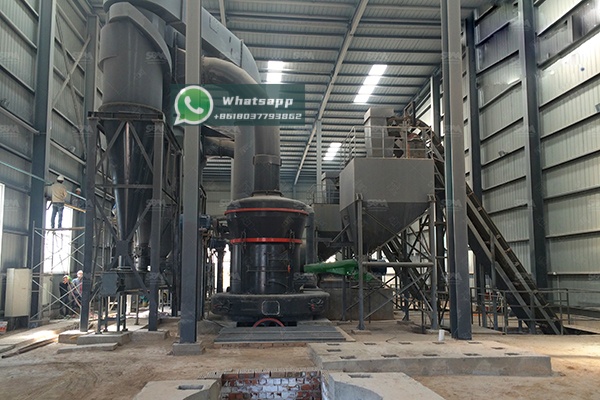
The MTW Trapezium Grinding Mill is a patented, compact, and eco-friendly grinding solution. It is suitable for materials with a maximum input size up to 50 mm and can produce final products as fine as 0.038 mm. Its curved grinding chamber, efficient classifier, and optimized airflow give it high grinding efficiency and low energy consumption. For diatomite, the MTW mill can produce medium and fine filtration aid grades while maintaining stable capacity. It is an excellent choice for processors who need a robust mill for calcined diatomite with reliable operation and easy maintenance.
| Model | Max. Feed Size (mm) | Final Size (mm) | Capacity (t/h) | Main Motor (kW) | Fan Motor (kW) |
|---|---|---|---|---|---|
| MTW110 | less than 30 | 1.6-0.045 | 3-9 | 55 | 55 |
| MTW138Z | less than 35 | 1.6-0.045 | 6-17 | 90 | 110 |
| MTW175G | less than 40 | 1.6-0.045 | 9.5-25 | 160 | 200 |
| MTW215G | less than 50 | 1.6-0.045 | 15-45 | 280 | 315 |
For a medium-scale Ethiopian diatomite plant, the MTW138Z or MTW175G can be a practical choice. For larger operations targeting regional export, the MTW215G offers high capacity and strong performance.
XZM Ultrafine Grinding Mill: High-Clarity Filtration Grades
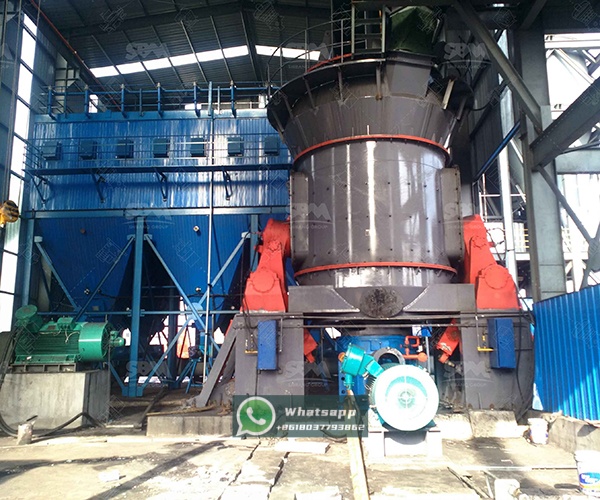
The XZM Ultrafine Grinding Mill is widely used for superfine powder production. It is suitable for soft or medium-hard materials with moisture content below 6 percent and can achieve an output fineness of 325 to 2500 mesh. For diatomite filtration aid, the XZM mill is ideal for producing fine and ultra-fine grades that require high clarity, large surface area, and precise top-size control. Its integrated classifier allows operators to adjust the product fineness and maintain a narrow particle size distribution, which is critical for high-performance filter aids.
| Model | Working Diameter (mm) | Max. Feed Size (mm) | Final Size (mesh) | Output (kg/h) | Main Motor Power (kW) |
|---|---|---|---|---|---|
| XZM221 | 800 | 20 or less | 325-2500 | 500-4500 | 75 |
| XZM268 | 1680 | 20 or less | 325-2500 | 5000-25000 | 315 |
With the XZM221, a small to medium Ethiopian producer can enter the high-clarity filtration market. With the XZM268, a larger producer can serve breweries, edible oil refiners, and water treatment companies at industrial scale. Both models can be combined with dust collection, air classification, and packaging systems to create a complete diatomite filtration aid production line.
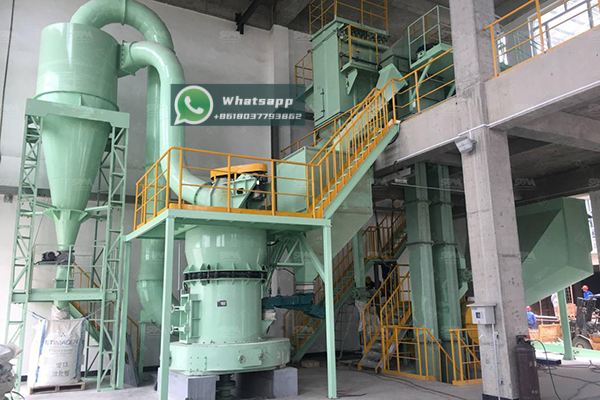
Processing Flow for Diatomite Filtration Aid
- Ore crushing: reduce raw diatomite to the feed size required by the mill.
- Drying: remove surface moisture to improve grinding efficiency.
- Calcination: burn organic matter and improve pore structure, whiteness, and filtration performance.
- Grinding: use MTW or XZM mills to achieve the target particle size.
- Classification: separate coarse and fine fractions to create multiple filtration grades.
- Dust collection: capture airborne silica dust and protect workers and environment.
- Packaging: store products in moisture-proof bags or bulk silos.
This flow can be customized based on the deposit quality, desired permeability, and local market requirements.
Quality Control and Environmental Considerations
Ethiopian diatomite processors should test incoming ore for silica content, moisture, loss on ignition, and particle density. After grinding, each batch should be checked for particle size distribution, permeability, pH, soluble iron, and brightness. Consistent quality is essential for breweries, pharmaceutical companies, and water treatment plants that cannot tolerate product variation. Modern grinding mills from Shanghai Zenith can be equipped with pulse-jet bag filters, cyclone separators, and closed conveying systems to minimize dust emissions and create a safer workplace.
Why Choose Shanghai Zenith Machinery
Shanghai Zenith Machinery Co., Ltd. offers a complete range of grinding equipment, including MTW Trapezium Grinding Mill, Ball Mill, MTM Medium-Speed Grinding Mill, Raymond Mill, LM Vertical Grinding Mill, LUM Ultrafine Vertical Mill, XZM Ultrafine Grinding Mill, and Hammer Mill. The company provides not only machines but also process design, installation guidance, commissioning, and after-sales service. For Ethiopian investors, this means access to proven technology, spare parts support, and process optimization for local diatomite. Whether the target is a coarse filtration aid for rapid flow or an ultra-fine grade for maximum clarity, Zenith can configure the right mill and classification system.
Conclusion
Ethiopia has the resources, market demand, and industrial momentum to develop a strong diatomite filtration aid sector. The key to success is selecting grinding technology that can deliver consistent particle size, high capacity, low energy consumption, and clean operation. The MTW Trapezium Grinding Mill and XZM Ultrafine Grinding Mill from Shanghai Zenith Machinery are two highly suitable solutions for Ethiopian diatomite processors. By combining advanced grinding, classification, and dust collection, producers can manufacture competitive filtration aids for local industries and regional export markets. With the right equipment and process design, diatomite can become a valuable contributor to Ethiopia’s mineral processing and clean technology future.
Key Equipment
Want This Solution for Your Project?
Contact us for a customized quotation and technical proposal.
Interested in This Solution?
Send us a message and our engineers will get back to you within 24 hours.