
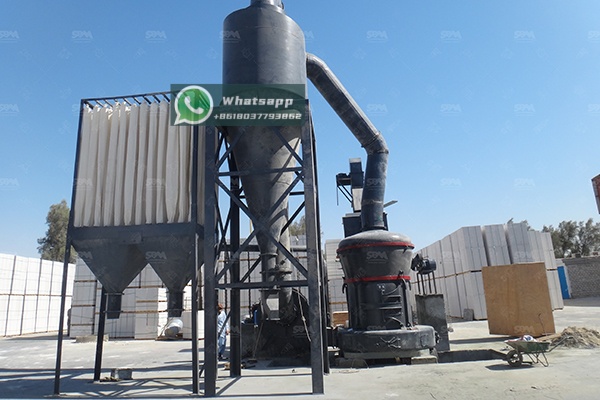
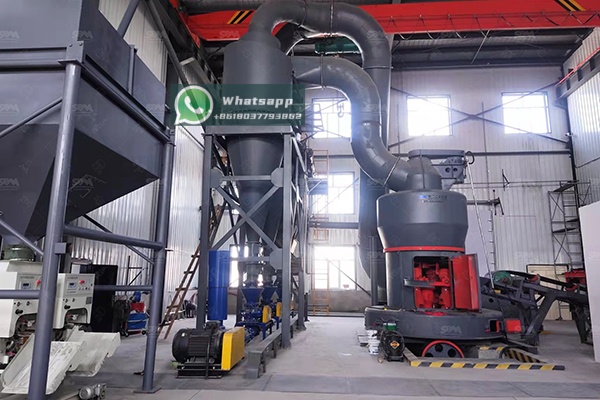
Calcium Carbonate Milling Line for Philippines Paper Whitening
Calcium carbonate (CaCO3) is the most widely used mineral pigment in the paper industry. It serves as both a filler and a coating material, helping paper achieve higher whiteness, brightness, opacity, and printability. In the Philippines, the paper industry is expanding because of rising demand for packaging, tissue, and printing grades. As local producers seek to reduce production costs and improve product quality, a reliable calcium carbonate milling line becomes a strategic investment. Shanghai Zenith Machinery Co., Ltd., an excellent manufacturer of ore grinding equipment in China, has developed complete milling solutions that are successfully applied in calcium carbonate projects around the world.
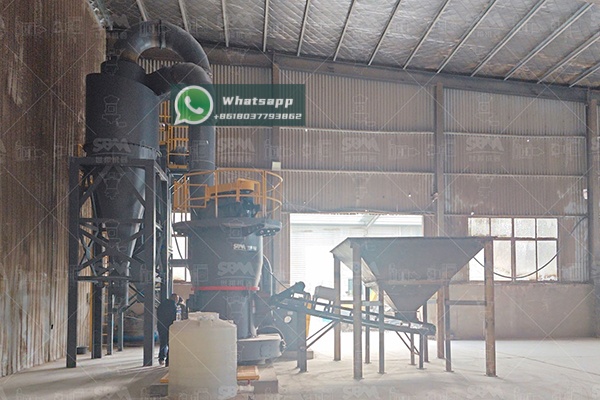
The Philippines has rich limestone resources, but turning this raw material into high-performance paper-grade powder requires advanced grinding technology. The target particle size for filler is often 325 mesh (45 microns) or finer, while coating-grade calcium carbonate often needs a D97 of 10 microns or less. With the right milling equipment, producers can control the particle size distribution, minimize oversize particles, and maintain stable brightness. Zenith’s grinding mills are designed for exactly this purpose.
Why Calcium Carbonate Is Essential for Paper Whitening
Paper whitening is a complex combination of bleaching, filling, and coating. Calcium carbonate contributes to whitening in two important ways. First, fine particles fill the voids between cellulose fibers and create many light-scattering surfaces. This increases the reflectivity of the paper and makes it look brighter and more opaque. Second, calcium carbonate is chemically stable and does not yellow with age, making it preferable to some other fillers. In alkaline papermaking systems, it is also more compatible than clay or talc and helps reduce the need for expensive wood pulp.
For coated paper, ultra-fine calcium carbonate is used in the coating formulation to improve surface smoothness, gloss, and ink acceptance. The shape and size of the particles are critical. Needle-like or irregular particles can reduce coating strength, while well-classified spherical or nearly spherical particles produce a smooth, uniform coating layer. Therefore, a high-quality milling line must be able to produce powder with sharp particle size distribution and no excessive coarse fraction.
Philippines Paper Market and Local Requirements
Paper manufacturers in the Philippines face several challenges. Energy costs are high, the climate is humid, and many plants need equipment that can operate continuously with low maintenance. A calcium carbonate milling line located near a paper mill can reduce the cost of transported filler. It also gives the mill the flexibility to adjust fineness and capacity according to daily production schedules. Whether the final product is for file folders, writing paper, or coating base stock, the milling line should be able to switch between different fineness settings quickly.
Zenith understands these requirements. The company’s products, such as the MTW Trapezium Grinding Mill and LUM Ultrafine Vertical Mill, are built with robust structures and intelligent controls. They can handle humid conditions and high work load without sacrificing product quality.
How the Calcium Carbonate Milling Line Works
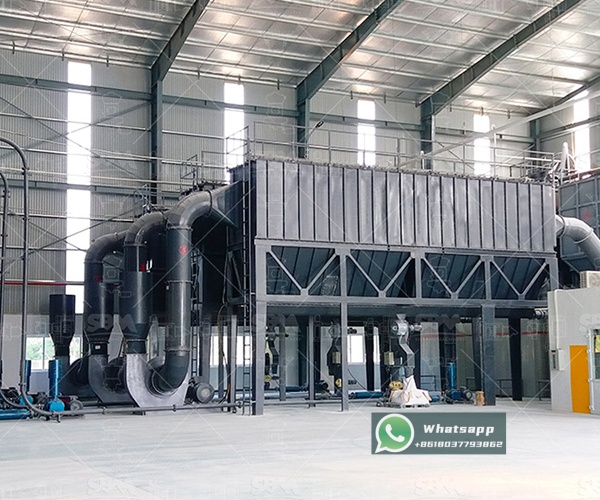
A complete calcium carbonate milling line begins with the crushing of limestone to a size that the mill can accept. In most Zenith systems, a jaw crusher reduces run-of-mine limestone to below 40 mm. The crushed material is then lifted by a bucket elevator and fed into the grinding mill through a vibrating feeder. Inside the mill, grinding rollers and rings grind the limestone particles under centrifugal force. A classifier separates the fine powder from oversize material and returns the oversize for further grinding. The finished powder is collected by a bag filter or cyclone, and a fan provides negative pressure to keep the system dust-free.
This process can be designed as an open circuit or closed circuit, depending on the target fineness and capacity. For paper whitening, a closed-circuit system with a high-efficiency classifier is preferred because it can produce a more uniform particle size. Zenith offers complete electrical control panels and automatic lubrication systems that simplify operation.
Recommended Zenith Products for the Philippines Milling Line
Shanghai Zenith Machinery’s main products include MTW Trapezium Grinding Mill, Ball Mill, MTM Medium-Speed Grinding Mill, Raymond Mill, LM Vertical Grinding Mill, LUM Ultrafine Vertical Mill, XZM Ultrafine Grinding Mill, and Hammer Mill. Among these, two products are especially suitable for a calcium carbonate milling line serving paper whitening.
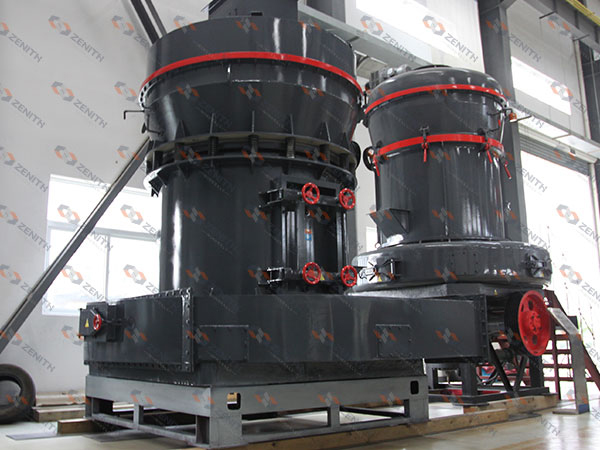
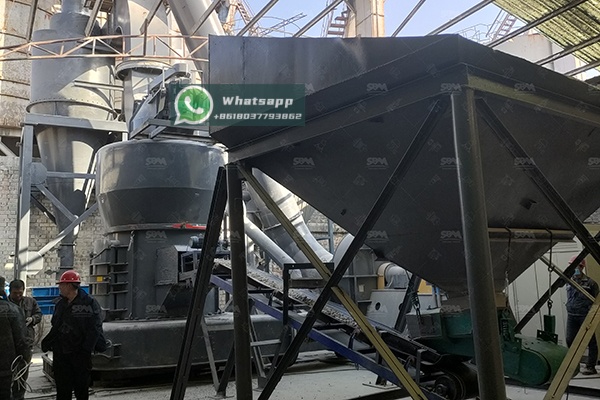
MTW Trapezium Grinding Mill is a multi-patent grinding mill characterized by a compact structure, long service life, and eco-friendly operation. It can accept feed sizes up to 50 mm and produce powder with a fineness of 1.6 to 0.038 mm. The MTW138 model, for example, has a capacity of 6-17 t/h, a main motor power of 90 kW, and a fan motor power of 110 kW. The larger MTW175G can process 9.5-25 t/h with a 160 kW main motor. These models are ideal for producing 325 mesh filler calcium carbonate for the Philippines paper market.
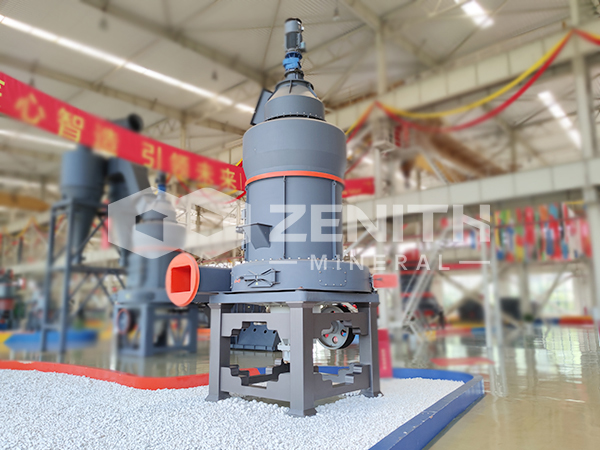
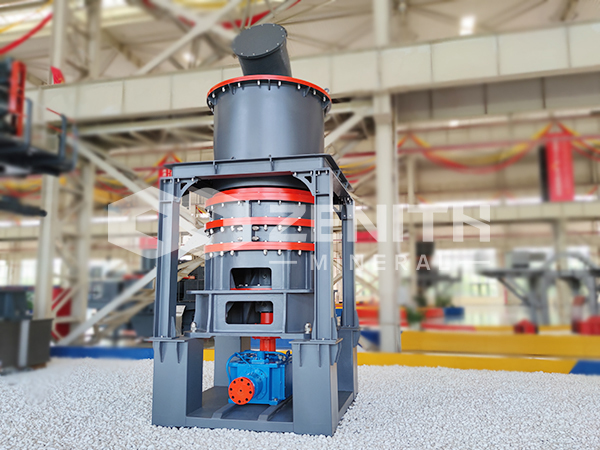
LUM Ultrafine Vertical Mill is designed for superfine powder production. It integrates grinding, drying, classifying, and transportation, and it occupies minimal floor space. The LUM1632 has a main machine power of 280-315 kW and a capacity of 2.0-13.5 t/h, producing powder with D97 in the range of 5-30 microns. This makes it a perfect choice for coating-grade calcium carbonate used in high-end white paper. In addition, the XZM Ultrafine Grinding Mill can produce 325-2500 mesh powder, with the XZM221 able to deliver 500-4500 kg/h. This machine is another useful option for very fine grades.
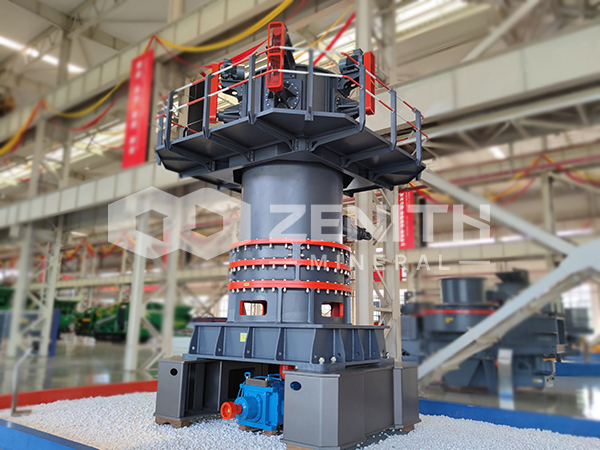
For a large integrated milling line, the LM Vertical Grinding Mill also has proven applications in mineral powder production. However, for paper whitening where narrow particle size distribution is critical, MTW and LUM mills are more commonly recommended because of their advanced classifiers and stable performance.
Key Technical Selection Criteria
When selecting a milling line, the buyer should consider raw material moisture, hardness, feed size, required fineness, and capacity. Limestone has a hardness of about 3 on the Mohs scale, which is suitable for roller mills and vertical mills. A maximum feed size of 50 mm can be handled by the MTW mill series. The final fineness for paper filler is usually 325 mesh, with a passing rate over 95 percent. For coating applications, the mill should be able to operate with a D97 between 5 and 10 microns. The LUM series is designed to meet these demanding requirements.
Energy efficiency is also crucial in the Philippines, where power tariffs are higher than in many neighboring countries. Zenith’s MTW series uses a bevel gear integral transmission that reduces energy loss. The LUM vertical mill has a high-efficiency classifier that avoids over-grinding. The result is lower electricity consumption per ton of finished powder. In addition, wear parts are made from durable alloys, and the grinding roller can be rebuilt several times, reducing the cost of replacement parts.
Building a Flexible and Expandable Production Line
Market demand in the Philippines can change quickly. A paper mill may need 325 mesh powder this month and 1250 mesh powder next month. By combining an MTW mill for coarse and medium powder with an LUM or XZM mill for ultrafine grades, the producer can serve different customers without investing in a completely new line. The milling line can also be designed with multiple silos and a blending system to adjust particle size distribution. Zenith provides layout design and technical consultation to help users choose the right combination.
Zenith Service and After-Sales Support
Shanghai Zenith Machinery has extensive experience in exporting grinding equipment to Southeast Asia. The company provides complete project evaluation, equipment selection, plant layout, installation supervision, and operator training. For the Philippines, delivery by sea can be arranged through major ports such as Manila and Cebu. Spare parts are stocked and shipped quickly to minimize downtime. After-sales engineers can provide remote support through video calls, and local partners can service mechanical and electrical components.
Conclusion
A well-designed calcium carbonate milling line is the cornerstone of cost-effective paper whitening. It allows local producers to transform limestone into high-value GCC powder that improves paper brightness, opacity, and surface quality. For Philippines paper manufacturers, Shanghai Zenith Machinery offers reliable grinding solutions with advanced technology and strong after-sales service. The MTW Trapezium Grinding Mill covers filler powder production, while the LUM Ultrafine Vertical Mill delivers coating-grade ultrafine powder. With Zenith as a partner, Philippine mills can achieve consistent quality, lower energy consumption, and greater competitiveness in the growing Asian paper market.
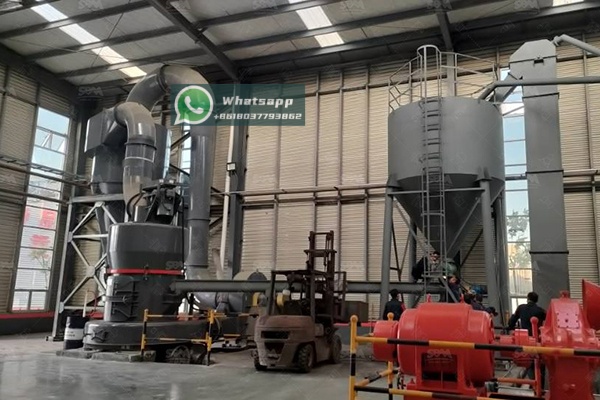
Key Equipment
Want This Solution for Your Project?
Contact us for a customized quotation and technical proposal.
Interested in This Solution?
Send us a message and our engineers will get back to you within 24 hours.