Introduction
Lebanon has abundant limestone resources and a strategic location at the eastern end of the Mediterranean. Its industrial sector, especially the paint, plastics, sealant and paper-related industries, needs fine functional fillers such as coating-grade calcium carbonate. Unlike ordinary aggregates or coarse powders, coating-grade calcium carbonate must satisfy strict specifications in fineness, particle size distribution, brightness, oil absorption and chemical purity. Therefore, selecting the right calcium carbonate mill for coating grade powder in Lebanon is a critical decision. The grinding equipment must combine crushing, grinding, classifying and material conveying in an efficient, low-energy system capable of producing a high-value product at a competitive cost.
Shanghai Zenith Machinery Co., Ltd. is a professional Chinese manufacturer of industrial powder grinding equipment. With years of research and production experience in ultra-fine grinding, Zenith provides complete solutions for calcium carbonate, barite, bentonite, kaolin, feldspar and many other non-metallic minerals. Among these, the LUM Ultrafine Vertical Mill and XZM Ultrafine Grinding Mill are particularly relevant to the Lebanese coating-grade calcium carbonate industry. The following sections explain why coating-grade production needs special milling equipment and how a Lebanese plant can benefit from Zenith technology.
What Is Coating-Grade Calcium Carbonate?
Coating-grade calcium carbonate is a very fine, mechanically ground natural limestone product used in coating formulations. It is not common filler grade with a wide distribution. Instead, it has a well-defined particle size, usually with a D97 between 5 and 30 micrometers depending on the application. In decorative paints, industrial coatings, wood coatings, powder coatings and paper coatings, calcium carbonate affects hiding power, gloss, film integrity, abrasion resistance and weather resistance. Fine calcium carbonate can extend expensive titanium dioxide pigment and improve the performance of the paint film. For paper and board coatings, it improves brightness, smoothness and printing ink acceptance. For PVC compounds and masterbatch, it fills the polymer matrix with minimal impact on impact strength.
Lebanese converters that make paint or coated paper have traditionally imported some high-fineness coating powders. A local grinding line supplied by an experienced manufacturer can reduce import dependence and create an export product for regional markets. Yet coating-grade powder production is not simply a matter of crushing finer. The mill must provide sharp classification to remove oversize particles, avoid excessive temperature degradation, ensure very low metal contamination from wear, and maintain consistent quality over long production periods.
Key Requirements for a Coating-Grade Grinding Mill
- Fineness and top-size control: Common coating-grade products include 600 mesh, 1250 mesh, 2000 mesh and even 2500 mesh. The mill must be adjustable through a high-performance classifier and deliver a narrow particle distribution.
- Low contamination: Coating quality depends on whiteness and cleanliness. The mill should use wear-resistant materials to minimize iron pollution during powder making. Zenith grinding equipment is designed for maximum purity and stable color performance.
- Energy saving: Ultra-fine grinding consumes much electric power. A vertical mill with an internal grinding bed can offer lower energy consumption and a smaller floor area than a conventional ball mill plus a separate classifier system.
- Simple operation and automatic control: Lebanese plant owners often need to reduce manual labor and ensure repeatable quality. LUM and XZM mills can be operated with PLC control and adjustable classifier speeds, making it easier to maintain different product recipes.
- Moisture tolerance: Coating-grade calcium carbonate should contain very little moisture. Zenith ultra-fine mills can accept limestone with moisture below 6%, and the vertical mill can integrate hot-air drying to handle a slightly wet feed.
Why Conventional Mills Are Not Always Enough
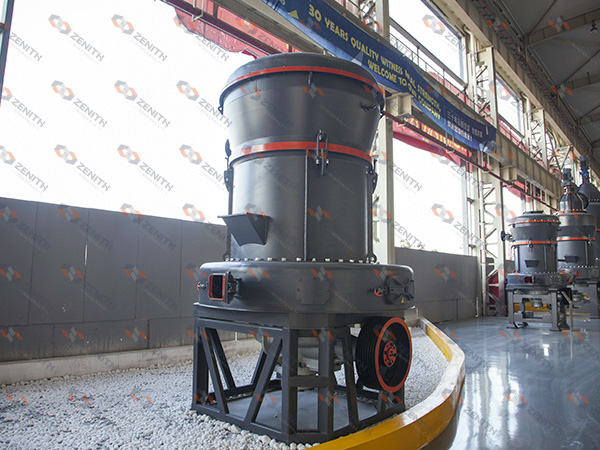
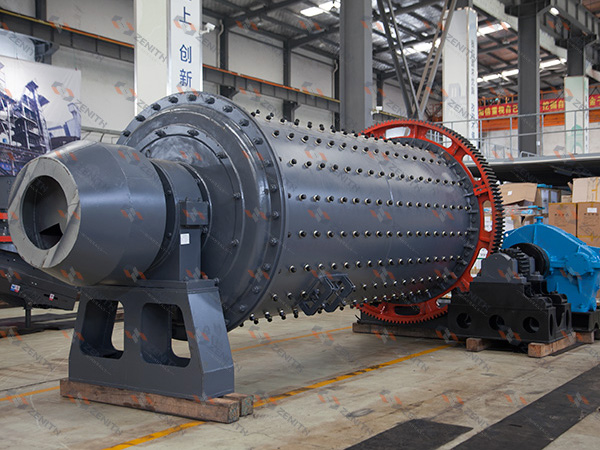
Traditional mills are useful for coarse and medium powders. Raymond mills can typically grind to around 0.045 mm, or 325 mesh, but a coating-grade product with D97 of 5 to 30 micrometers requires a more advanced system. Ball mills may have high unit energy consumption and need a separate high-efficiency classifier. Otherwise, the finished powder can contain too many oversize particles. The LUM vertical mill and XZM ultra-fine mill combine grinding and classification in a compact system. They are able to produce a high content of fine particles with stable fineness, which is exactly what a coating-grade paint or paper filler demands.
Recommended Zenith Grinding Mills for Lebanese Coating-Grade Powder
Two Zenith product lines deserve special attention when planning a calcium carbonate mill for coating grade powder in Lebanon: the LUM Ultrafine Vertical Mill and the XZM Ultrafine Grinding Mill. Each represents modern ultra-fine grinding technology, but their capacities and design features are suited to different plant strategies.
1. LUM Ultrafine Vertical Mill
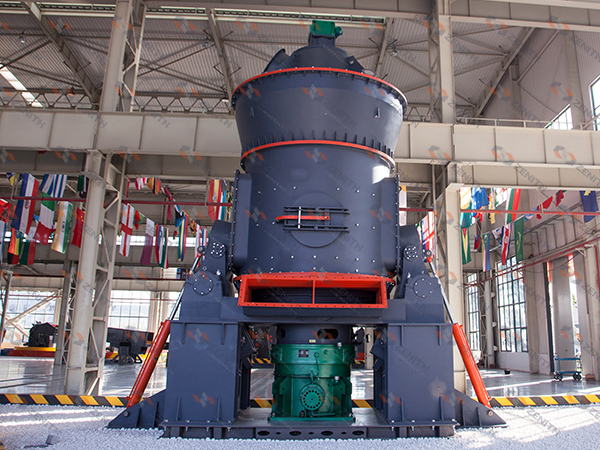
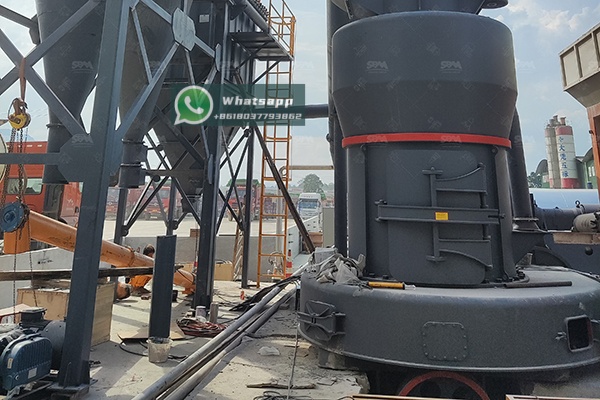
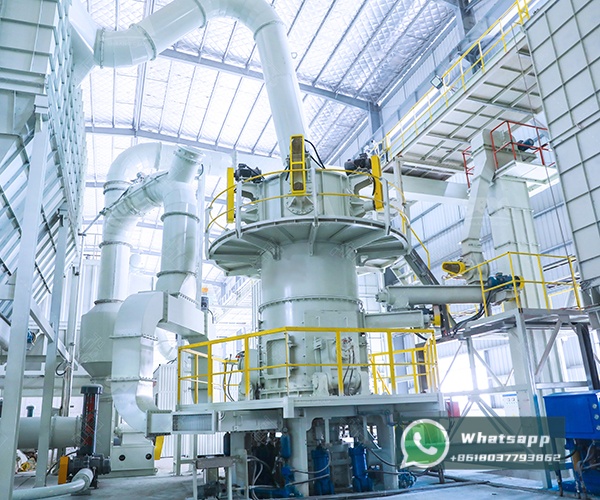
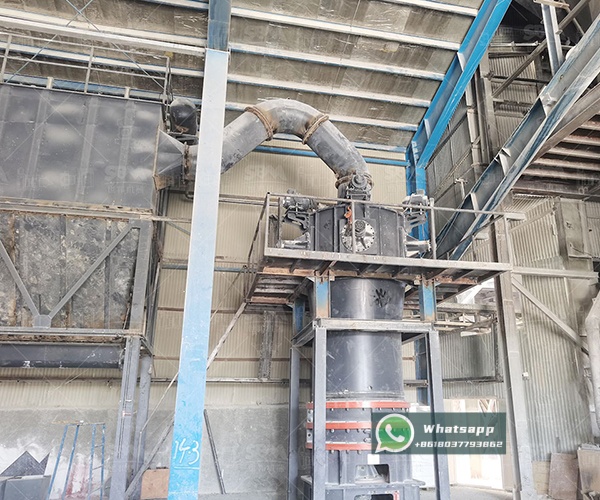
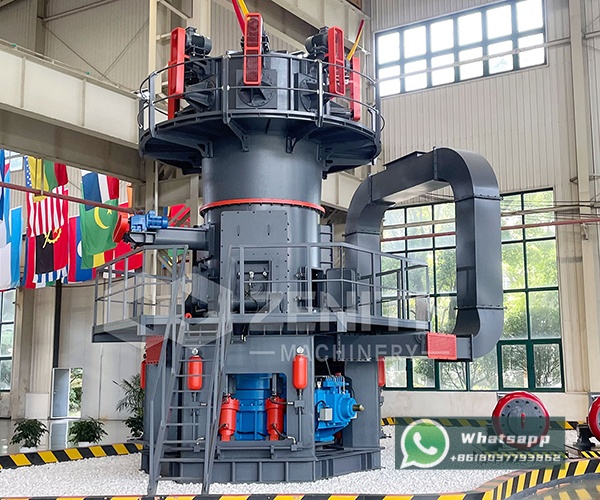
The Zenith LUM Ultrafine Vertical Mill is a flagship solution for ultra-fine powder processing in the mineral industry. It integrates grinding, drying, powder selection and conveying in one machine. The grinding table and rollers process limestone with medium pressure, while a dynamic air classifier inside the main machine rejects coarse particles. Because the classifier speed can be tuned, the final product can be set in the D97 range of 5 to 30 micrometers. The LUM1525, LUM1632 and LUM1836 models are suitable for many coating-grade calcium carbonate applications. Their main motor powers are 220–250 kW, 280–315 kW and 355–400 kW respectively. Capacity ranges from about 1.6 to 15 t/h depending on feed size, hardness and final fineness.
| Model | Main Motor Power (kW) | Capacity (t/h) | Fineness D97 (μm) |
|---|---|---|---|
| LUM1525 | 220–250 | 1.6–11.5 | 5–30 |
| LUM1632 | 280–315 | 2.0–13.5 | 5–30 |
| LUM1836 | 355–400 | 2.3–15 | 5–30 |
For a Lebanese producer aiming at coating-grade products, the LUM mill offers several advantages. First, it reduces the need for separate classifying equipment, lowering civil construction costs. Second, its vertical design keeps vibration and noise low. Third, intelligent operation helps unify powder quality from batch to batch. Additionally, the roller and liner service life is long, and maintenance can be performed safely. The mill can be equipped with a pulse dust collector to make the workshop environment meet modern standards.
2. XZM Ultrafine Grinding Mill
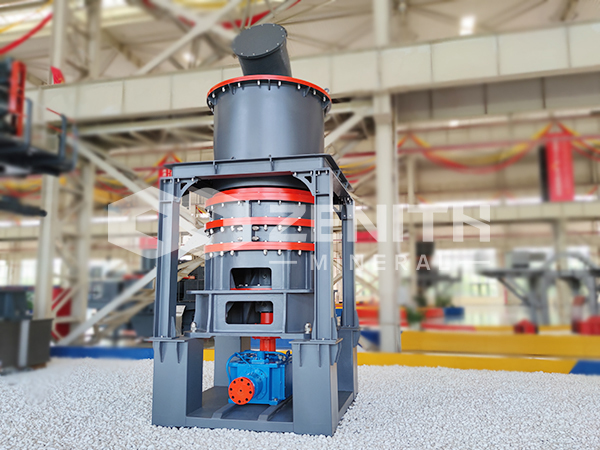
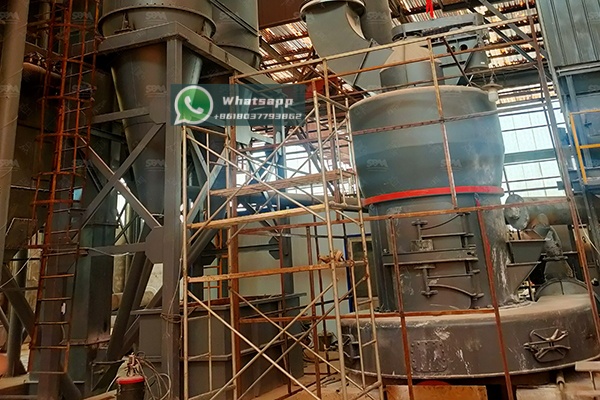
The XZM Ultrafine Grinding Mill is another excellent choice for Lebanese coating-grade calcium carbonate production. It is particularly suitable for soft and medium-hard minerals with moisture below 6% and a maximum feed size of 20 mm. The mill uses multi-race grinding rings and a strong air classifier to produce powder between 325 mesh and 2500 mesh. Model XZM221 has a main motor power of 75 kW and an output of about 500–4500 kg/h. The larger XZM268 uses 315 kW and can reach 5000–25000 kg/h under specified working conditions. For lower initial investment and modular operation, the XZM system can supply specialized coating-grade powder without requiring a very large central grinding building.
Because the XZM mill can move between different very fine grades by adjusting the classifier speed, it is valuable in paint filler production. If a Lebanese company needs to make a 1250 mesh coating filler in the morning and a 2500 mesh specialty product later, the XZM provides useful flexibility. With a compact footprint and proven installations around the world, this machine is reliable, easy to operate and simple to maintain. Zenith can also supply a complete system including crusher, vibrating feeder, bucket elevator, silo, dust collector and packing unit, making it a practical turnkey solution.
| Model | Working Diameter | Max Feed Size (mm) | Final Size (mesh) | Output (kg/h) | Main Motor Power (kW) |
|---|---|---|---|---|---|
| XZM221 | Φ800 | ≤20 | 325–2500 | 500–4500 | 75 |
| XZM268 | Φ1680 | ≤20 | 325–2500 | 5000–25000 | 315 |
Complete Solution and After-Sales Support in Lebanon
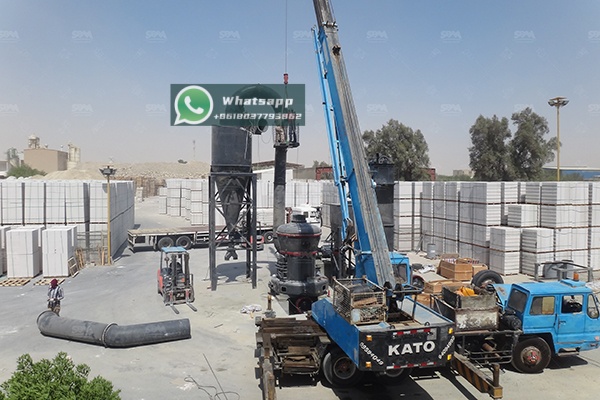
Zenith does not merely supply a single calcium carbonate mill. From the raw limestone quarry to the bagging section, the engineering team can propose a grinding line suited to Lebanese conditions. Zenith also offers the MTW Trapezium Grinding Mill, MTM Medium-Speed Grinding Mill, Raymond Mill, Ball Mill and Hammer Mill. In a coating-grade plant, the Hammer Mill can be used to reduce limestone to the feed size required by the XZM or LUM mill. For a producer that also wants to serve the building-materials market, the MTW mill can prepare 0.045 mm base powders efficiently. This versatility makes it easier for investors to create a diversified industrial-mineral business.
For a new coating-grade calcium carbonate project, Zenith provides material testing, process design, equipment selection, installation supervision, commissioning and operator training. Because Lebanon has skilled technical workers but not always extensive experience in ultra-fine mineral processing, clear manuals and responsive after-sales service matter. Zenith has partners and agents in the Middle East and North Africa, and spare parts can be shipped quickly to Beirut or other Lebanese ports. The goal is a high equipment availability rate over every production year.
Economic Considerations for Lebanese Producers
The market value of calcium carbonate increases sharply with fineness and quality. A ton of coarse limestone may sell as an inexpensive construction material, while micronized coating-grade carbonate can support a specialized paint and paper supply chain. Installing an efficient LUM Ultrafine Vertical Mill in Lebanon can help a plant convert local limestone into high-value industrial powder. For a smaller or more flexible operation, the XZM Ultra-Fine Grinding Mill offers a wise way to start with moderate capital and add capacity as the market grows. Both product lines can reduce energy cost per ton of end-product compared with many old-generation mills.
Lebanon’s proximity to Syria, Jordan, Iraq and the Gulf countries also presents export opportunities. Those markets are investing in paints, construction chemicals, ceramics and plastic profiles, all of which consume coating-grade calcium carbonate. With the correct calcium carbonate mill for coating grade powder in Lebanon, local producers can compete with imported material on both quality and logistics.
Conclusion
Coating-grade calcium carbonate is one of the most demanding industrial mineral powders to produce. The process must deliver stable fineness, precise classification, low contamination, minimal energy consumption and consistent operation. For Lebanon, the correct solution is not usually a conventional ball mill or an old-style Raymond mill. Instead, companies should compare modern ultra-fine grinding technology from Shanghai Zenith. The LUM Ultrafine Vertical Mill is an excellent first recommendation for high-capacity coating-grade plants. The XZM Ultrafine Grinding Mill is a strong alternative for smaller plants or flexible production schedules. Both are produced by a manufacturer with deep experience in ultra-fine powder equipment and complete system supply. With this technology, Lebanon can convert its natural calcium carbonate resources into international-class coating-grade powder and occupy a stronger position in the regional industrial market.
Want This Solution for Your Project?
Contact us for a customized quotation and technical proposal.
Interested in This Solution?
Send us a message and our engineers will get back to you within 24 hours.