
Introduction: Barite in Malaysia’s Oil and Gas Industry
Barite, also known as barium sulfate, is one of the most important minerals in oil and gas drilling. In Malaysia, exploration and production activities around Peninsular Malaysia, Sarawak and Sabah have generated a stable need for high-quality drilling fluids and their weight materials. Barite is far more than a simple filler; it controls the density of drilling mud, balances formation pressure, carries drill cuttings to the surface, cools the drill bit, and stabilizes the wellbore. To perform these functions, raw barite must be ground into powder that meets strict physical and chemical specifications. Therefore, the barite grinding mill for drilling grade powder in Malaysia must be selected carefully, because it directly influences productivity, product quality and final drilling performance.

What Drilling-Grade Barite Powder Demands
Drilling-grade barite is not the same as ordinary industrial filler. It is regulated by specifications similar to API standards. The finished powder must contain sufficient barium sulfate, maintain a high specific gravity, and show limited acid-soluble material and water-soluble alkaline-earth metals. For the mud engineer, grinding quality is evaluated by sieve residue at 200 mesh and 325 mesh. The goal is to have no coarse particles that can damage pumps or form a filter cake too thick, while avoiding excessive fines that may modify viscosity. A production line must therefore provide a narrow particle-size distribution centered at about 75 microns or finer.
Because the product is dense, any contaminant introduced during grinding can become a visible problem. A mill should not add free iron, scale nor excessive abrasion powder. In the same way, the grinding chamber and classifier must prevent short-circuiting, because a small amount of oversized material can cause the whole batch to fail the sieve test. That explains why leading grinding lines use roller mills or vertical mills with built-in classifiers rather than simple open-circuit crushers.
Malaysian Conditions and Operating Challenges
Malaysia has a tropical climate. Barite is frequently shipped and stored in bags or bulk near coastal ports, where humidity can raise the surface moisture of the ore. Moisture is one of the most common causes of unstable production in grinding mills. When the feed is damp, fine particles stick to rollers, the inner cone or the conveying system. The mill should be capable of handling slight moisture or it must be integrated with a drying system. In addition, plant operators in Malaysia must deal with grid costs, remote locations and limited maintenance crews. A large machine that requires less floor space, fewer auxiliary units and simple maintenance is a real operational benefit.
Local barite feed can also vary in lump size and impurities such as quartz and clay. If the mill can accept a relatively large feed size, for example up to 40 or 50 millimeters, the crushing requirement before the mill is simpler. As a result, the power consumption and maintenance of the upstream jaw crusher or cone crusher can be reduced.
Shanghai Zenith Machinery: Specialized Supplier of Ore Grinding Equipment
Shanghai Zenith Machinery Co., Ltd. is an excellent manufacturer of ore grinding equipment in China. The company has made significant achievements in the field of ultra-fine powder grinding and concentrates on the research, development and production of industrial powder mills. Its main products include MTW trapezium grinding mill, MTM medium-speed grinding mill, LM vertical grinding mill, LUM ultrafine vertical mill, Raymond mill, XZM ultrafine grinding mill, hammer mill and ball mill. For Malaysian barite processing plants, two series are particularly important: the MTW trapezium mill and the LM vertical mill.
MTW Trapezium Grinding Mill: Flexible and Productive Barite Grinding
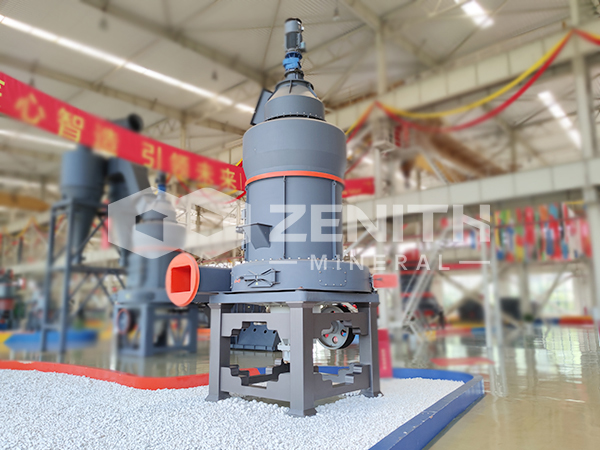
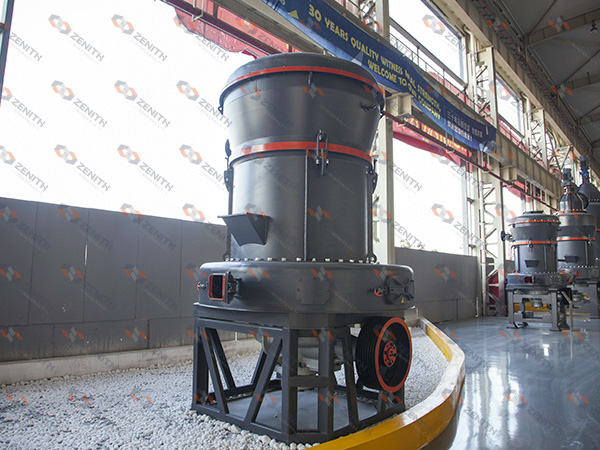
The MTW trapezium grinding mill is one of Zenith’s leading milling machines. It is a multi-patent industrial mill with compact structure, long service life and eco-friendly design. The MTW model can accept a maximum feed size of 50 mm, while the final product is adjustable from 1.6 mm to 0.038 mm. At such a range, it covers the 200-mesh requirement and reaches 325 mesh when needed. These features make the MTW suitable for drilling barite powder.
For medium-capacity barite lines, Zenith recommends the MTW175G. This model is powerful enough to sustain continuous production while leaving an adequate margin for different ore grindability. Its nominal data show a maximum feed size of less than 40 mm, a product fineness range of 1.6 to 0.045 mm, a capacity range of 9.5 to 25 tons per hour, a main motor of 160 kW and a fan motor of 200 kW.
Why the MTW175G Fits Drilling-Grade Barite
- It operates at the fineness range generally required by drilling mud, including 45 to 75 microns.
- Its built-in classifier removes oversized particles so that the final powder matches the sieve-residue specification.
- The sealed structure improves working conditions in tropical plants and reduces dust escape.
- The compact arrangement reduces the footprint compared with older Raymond-type systems.
For smaller plants or lower initial budgets, the MTW138Z model can also produce the same fineness range with a capacity of 6 to 17 tons per hour and a maximum feed size of 35 mm. The MTW series therefore offers a step by which a Malaysian producer can grow from a single production unit to a larger barite hub.
LM Vertical Grinding Mill: Integrated Grinding for Large-Scale Barite Projects
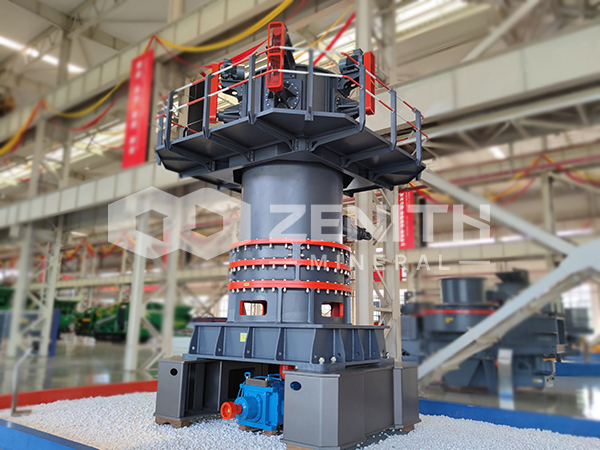
For centralized plants with high throughput, the LM vertical grinding mill offers an efficient alternative. The LM series integrates crushing, grinding, powder selection, drying and material conveying in one machine. This is extremely valuable in Malaysia because it shortens the process flow and minimizes civil works. A vertical mill also uses vertical grinding rollers and a forced classifier to create a more narrow product distribution.
In the Zenith vertical mineral mill series, the LM190K is particularly well suited for a sizable drilling-grade barite project. It has a table diameter of 1900 mm, a capacity of 23 to 68 tons per hour, an output fineness range of 170 to 40 microns, a maximum feed size of 45 mm and a main motor power of 500 kW.
Advantages of the LM190K for Barite
- The classifier can be adjusted to produce material that satisfies 200-mesh and 325-mesh drilling-grade tests.
- When the raw material surface moisture is high, the LM integrated drying function permits hot gas to evaporate water inside the mill.
- Because the vertical mill combines many separate functions, fewer bucket elevators, belt conveyors and classifier collecting systems are required.
- The small occupational area is an advantage in crowded industrial areas and reduces foundation cost.
For extremely high production and mineral operations, the LM280K can support capacities up to 170 tons per hour, while smaller lines could use the LM130K. The LM series thus covers varying requirements across the Malaysian oil and gas supply chain.

Which Barite Grinding Mill Is Recommended in Malaysia
If the goal is to install a barite grinding mill for drilling grade powder in Malaysia, the choice can be simplified based on throughput and site strategy. For a flexible mid-size plant, especially when the product is mainly for local mud services or oilfield stocking points, Zenith recommends the MTW175G Trapezium Grinding Mill. It provides reliable capacities of 9.5 to 25 t/h, requires moderate investment and produces material in the 0.045 mm range, which is equivalent to 325 mesh when necessary.
For a central grinding facility planned to supply multiple drilling projects, or when the processed barite uses moisture-laden feed, the LM190K Vertical Grinding Mill is recommended. It handles up to 68 tons per hour in the table range and combines drying, grinding and classifying in one flow. A centralized plant using the LM190K can reduce operational manpower and make the entire barite processing line simpler.
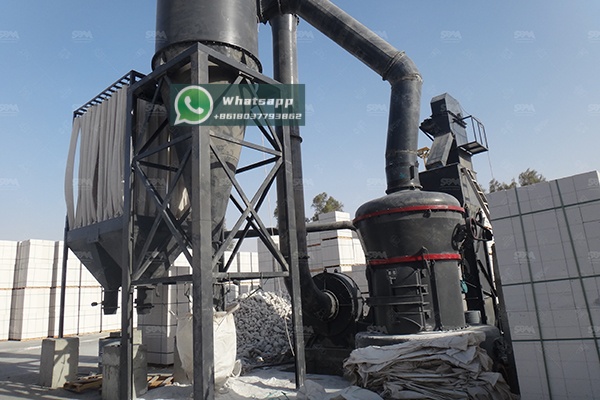
The complete milling system selected by Shanghai Zenith can include the feeder, mill, dust collector, blower, piping and control system. Since raw minerals vary from one supply source to another, Zenith engineers can match the recommended equipment to the actual ore test and final target powder. The correct choice will increase yield, lower energy use and produce barite powder that can enter the drilling-fluid market with confidence.
Key Equipment
Want This Solution for Your Project?
Contact us for a customized quotation and technical proposal.

Interested in This Solution?
Send us a message and our engineers will get back to you within 24 hours.