Introduction
Malaysia’s industrial and power sectors rely on reliable, cost-effective emissions control. Coal-fired power plants, industrial boilers, and process plants use limestone-based wet flue gas desulfurization (WFGD) to reduce SO2 emissions. The performance of a WFGD system depends heavily on the quality and fineness of limestone powder. This article examines limestone mill selection for desulfurization powder in Malaysia, key powder specifications, and how Shanghai Zenith Machinery Co., Ltd. can support projects with advanced grinding equipment.
Why Limestone Desulfurization Powder Is Important in Malaysia
Malaysia has a mixed energy landscape. Coal remains an important fuel for baseload electricity, while industrial zones in Peninsular Malaysia, Sabah, and Sarawak operate boilers and furnaces that require SO2 control. Limestone (calcium carbonate, CaCO3) is widely available in deposits around Ipoh, Perak, Langkawi, Kuantan, and parts of Sarawak. When ground to the right particle size, limestone reacts with SO2 in the absorber to form gypsum. The reaction efficiency, limestone utilization, and operating cost are directly linked to particle size distribution, surface area, and chemical purity.
For many Malaysian WFGD projects, the target is 250 mesh or 325 mesh. A common specification is 90% passing 325 mesh (approximately 45 microns) or 90% passing 250 mesh (approximately 61 microns). Finer powder increases reactivity but also increases grinding energy. Therefore, the mill must balance fineness, capacity, energy consumption, and maintenance cost.
Key Specifications for Limestone Desulfurization Powder
Before selecting a limestone mill, project teams should define several parameters:
- Chemical composition: CaCO3 content, usually >90% or >95% for high-efficiency WFGD; low silica, alumina, and iron content reduce wear and inert material.
- Fineness: 250 mesh or 325 mesh, often D90 = 45–61 μm. Some systems require D97 = 44 μm.
- Moisture: Feed moisture may vary from 1% to 8%. If moisture is high, drying capability inside the mill becomes important.
- Capacity: Small industrial boilers may need 3–10 t/h; medium plants 10–30 t/h; large power stations 30–100 t/h or more.
- Availability: The mill must run continuously with high uptime, easy maintenance, and low spare parts consumption.
In Malaysia’s humid tropical climate, equipment corrosion protection, dust collection, and moisture control are also critical. A professional grinding solution should include feeding, grinding, classification, dust collection, and automated control.
Grinding Solutions from Shanghai Zenith Machinery
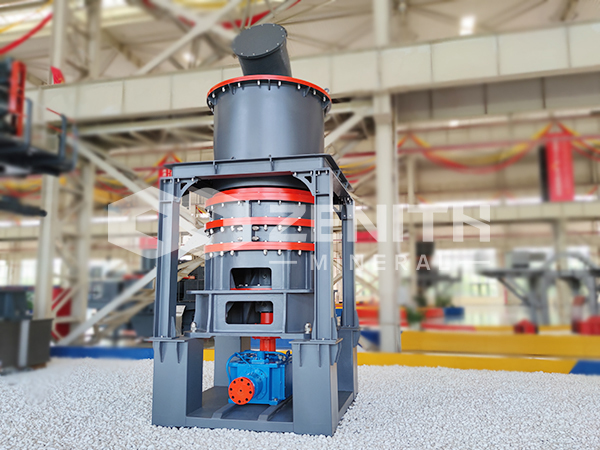
Shanghai Zenith Machinery Co., Ltd. is an excellent manufacturer of ore grinding equipment in China and has made great achievements in the field of ultra-fine powder grinding. The company specializes in research, development, and production of industrial powder grinding equipment. Its product range includes MTW Trapezium Grinding Mill, LM Vertical Grinding Mill, LUM Ultrafine Vertical Mill, XZM Ultrafine Grinding Mill, MTM Medium-Speed Grinding Mill, Raymond Mill, Hammer Mill, and Ball Mill. For limestone desulfurization powder in Malaysia, two solutions are particularly suitable: the MTW Trapezium Grinding Mill and the LM Vertical Grinding Mill.
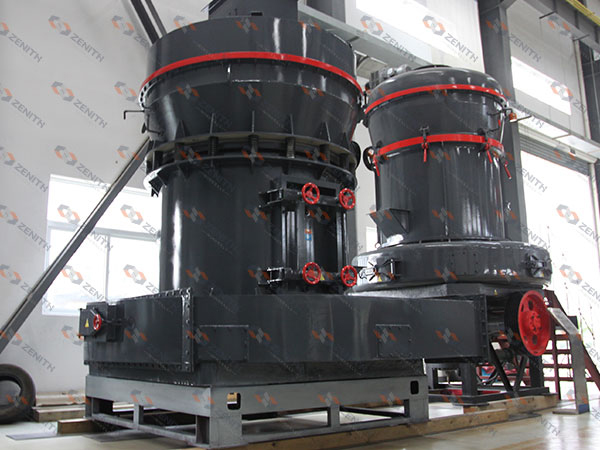
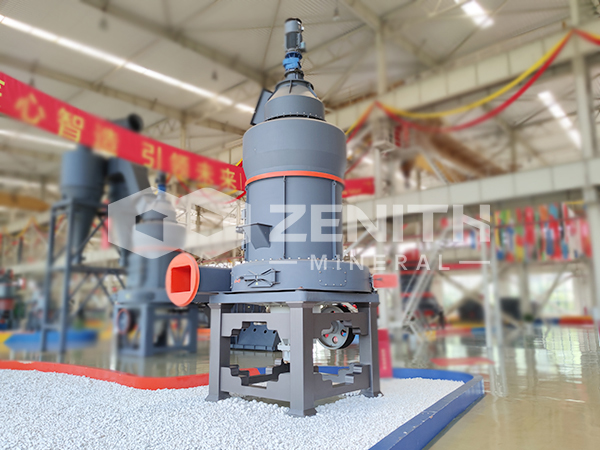
MTW Trapezium Grinding Mill: Flexible Solution for Medium Capacity
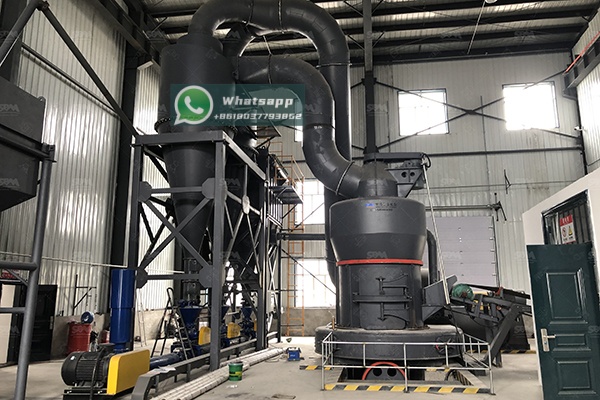
The MTW Trapezium Grinding Mill is a patented, compact, and eco-friendly mill. It is designed for materials with a maximum input size of 50 mm and can produce final product as fine as 0.038 mm. For desulfurization powder, it can reliably achieve 325 mesh and is well suited to industrial boiler houses, cement plants, and medium-sized power stations in Malaysia.
Recommended models include the MTW138Z, MTW175G, and MTW215G. The MTW138Z has a maximum feed size below 35 mm, final size of 1.6–0.045 mm, and capacity of 6–17 t/h. The MTW175G offers 9.5–25 t/h, while the MTW215G reaches 15–45 t/h with a maximum feed size below 50 mm. These capacities cover many Malaysian desulfurization projects that require 10–40 t/h of limestone powder.
The MTW mill features a curved blade, high-efficiency classifier, and wear-resistant grinding rollers. It has low vibration, low noise, and an integrated pulse dust collector to meet strict environmental standards. Its compact structure reduces civil works and installation time, which is advantageous for projects with limited site space.
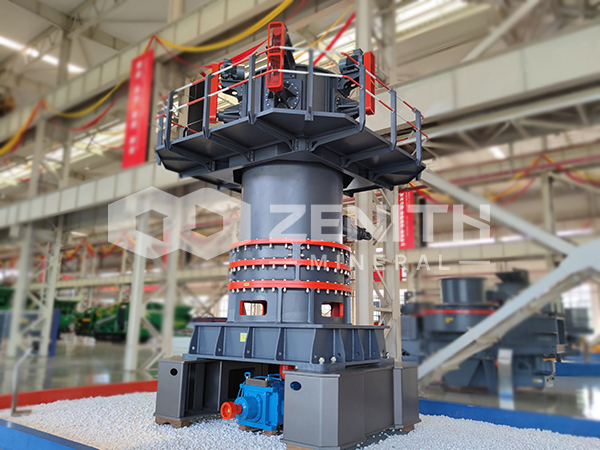
LM Vertical Grinding Mill: High Capacity and Integrated Drying
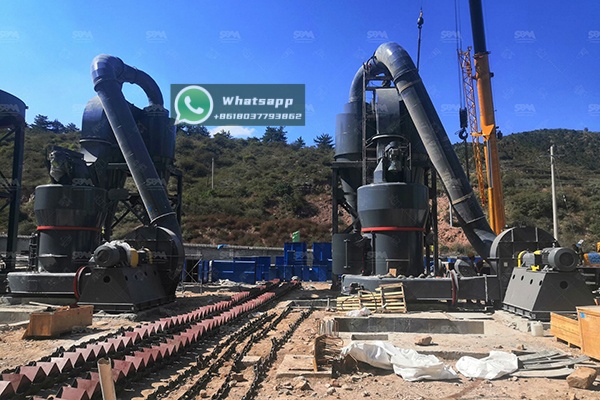
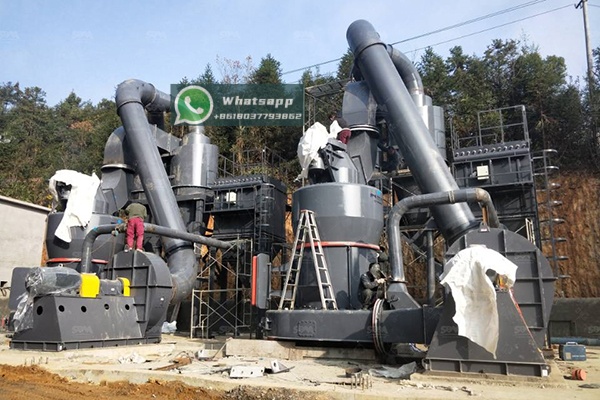
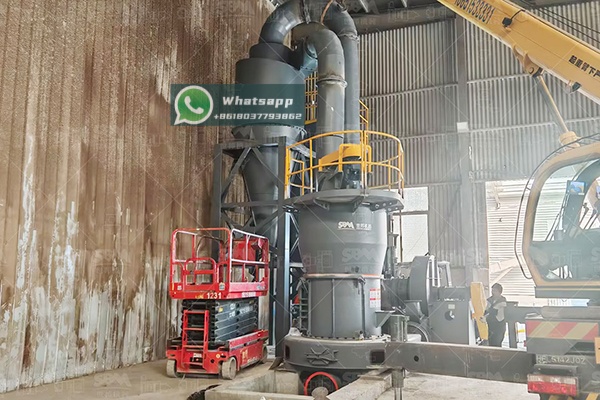
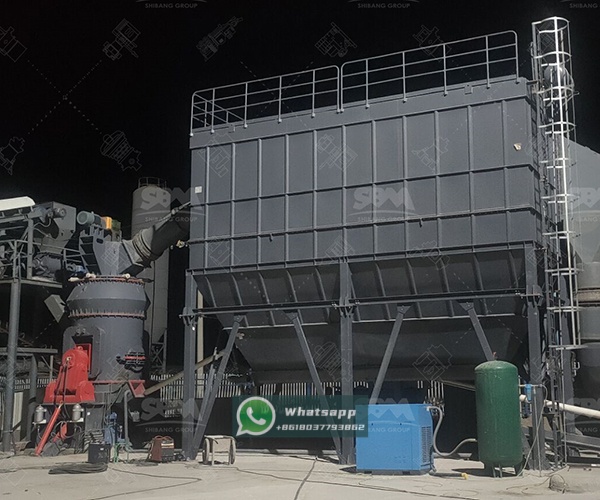
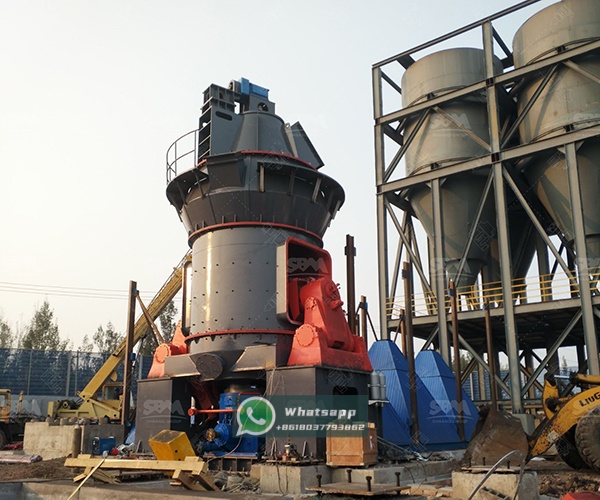
For large coal-fired power plants and centralized limestone powder preparation stations, the LM Vertical Grinding Mill is an excellent choice. It integrates crushing, grinding, powder selection, drying, and material conveying into one system. This reduces occupied area and simplifies the process flow. The LM Vertical Grinding Mill is especially suitable for Malaysia because it can handle limestone with moderate moisture while producing a fine, consistent product.
In the Vertical Mineral Mill Series, models such as LM130K, LM190K, and LM280K are available. The LM130K has a plate diameter of 1300 mm and capacity of 10–28 t/h. The LM190K provides 23–68 t/h, and the LM280K provides 50–170 t/h. Output fineness can be adjusted from 170 to 40–45 μm, matching 325 mesh desulfurization requirements. Main motor power ranges from 200 kW to 1250 kW depending on capacity.
The LM mill uses a grinding bed and hydraulic system to control the grinding pressure. It has high grinding efficiency, low energy consumption per ton, and stable product quality. The built-in classifier ensures narrow particle size distribution, which improves SO2 absorption and limestone utilization. Maintenance is easier because the grinding rollers can be swung out of the mill for service, reducing downtime.
How to Choose the Right Limestone Mill in Malaysia
Selecting the right mill is not only about capacity. Project teams should consider:
- Plant size and load: Industrial boilers and small power plants can use MTW mills with 6–25 t/h. Large utilities should evaluate LM vertical mills with 23–170 t/h.
- Fineness requirement: If 325 mesh is required, both MTW and LM can achieve it. For ultra-fine filler or special applications, LUM or XZM mills may be considered.
- Feed moisture: LM vertical mills offer strong drying ability using hot gas. MTW mills can also be equipped with drying systems when needed.
- Site layout: LM vertical mills have a smaller footprint than ball mill systems. MTW mills are compact and flexible for medium projects.
- Automation: PLC/DCS control, remote monitoring, and automatic lubrication reduce labor and improve safety.
- After-sales support: Local service, spare parts availability, and training are essential for Malaysian operators.
Shanghai Zenith Machinery provides customized process design, equipment manufacturing, installation guidance, and commissioning support. The company can recommend the most suitable model based on limestone test data and project requirements.
Quality Control and Powder Preparation
To produce high-quality desulfurization powder, the complete system should include:
- Feed hopper and vibrating feeder: Ensures stable and continuous material supply.
- Metal removal and crushing: Prevents iron and oversized pieces from damaging the mill.
- Grinding and classification: MTW or LM mill with high-efficiency classifier.
- Dust collection: Bag filter or pulse dust collector to meet emission standards.
- Storage and transport: Silos, pneumatic conveying, and weigh feeding to the absorber.
- Laboratory testing: Regular testing of fineness, CaCO3 content, moisture, and reactivity.
In Malaysia, environmental regulations and utility performance targets demand high availability. Selecting a robust mill and optimizing the whole circuit can reduce limestone consumption, gypsum moisture, and auxiliary power consumption.
Conclusion
Limestone desulfurization powder is a key consumable for clean coal and industrial emissions control in Malaysia. The right grinding mill determines powder fineness, reactivity, energy cost, and long-term reliability. Shanghai Zenith Machinery Co., Ltd. offers proven solutions for this application. The MTW Trapezium Grinding Mill is an excellent choice for medium-capacity plants requiring flexibility and fine product size, while the LM Vertical Grinding Mill is ideal for large power stations needing high capacity and integrated drying. By combining high-quality equipment with professional engineering support, Malaysian projects can achieve efficient, stable, and environmentally responsible limestone powder production.
For more information about limestone mills for desulfurization powder in Malaysia, contact Shanghai Zenith Machinery Co., Ltd. for a tailored proposal and equipment selection.
Key Equipment
Want This Solution for Your Project?
Contact us for a customized quotation and technical proposal.
Interested in This Solution?
Send us a message and our engineers will get back to you within 24 hours.