Introduction
Indonesia’s road construction sector is entering a period of sustained expansion. Toll road programs, national road rehabilitation, industrial estates, airport access roads, and the development of the new capital region all require large volumes of reliable road base materials. Basalt has become a strategic resource for these projects because it combines high compressive strength, excellent durability, angular particle shape, and strong resistance to abrasion. When properly crushed and ground, basalt can serve as a high-performance road base additive that improves bearing capacity, load transfer, and long-term pavement performance.
For many Indonesian quarry operators, road contractors, and asphalt producers, the main challenge is not finding basalt. It is selecting the right grinding mill to convert basalt into the required particle size distribution at a competitive cost. This article examines the use of basalt grinding mills for road base additives in Indonesia and recommends two Shanghai Zenith products that are well suited to this application: the MTW Trapezium Grinding Mill and the LM Vertical Grinding Mill.
Why Basalt Is a Strategic Road Base Additive in Indonesia
Basalt is an igneous rock formed from cooled lava. In Indonesia, volcanic geology means basalt and related volcanic rocks are widely available in regions such as Java, Sumatra, Sulawesi, and Nusa Tenggara. These deposits often provide strong, dense, and durable aggregates. For road base applications, basalt is valued for several reasons. First, its high hardness and toughness help the base layer resist traffic loads and deformation. Second, its angular crushed shape creates good interlock between particles, which increases shear strength and stability. Third, basalt generally has low water absorption and good resistance to weathering, an important factor in Indonesia’s tropical climate with heavy rainfall and high humidity. Fourth, when ground into fine powder, basalt can act as a mineral filler or additive in asphalt mixtures and cement-treated base layers, improving adhesion, stiffness, and moisture resistance.
Road base additives may include coarse aggregate, manufactured sand, crusher dust, and fine mineral filler. The required fineness depends on the application. A stabilized base course may need a well-graded material from 0 to 3 mm or 0 to 5 mm. Asphalt concrete and pavement seal layers may require filler passing 200 mesh or finer, often below 0.075 mm. In some advanced mixes, basalt powder with a top size of 45 microns or less can improve the density and mechanical performance of the mix. This range of requirements means that a flexible, efficient grinding circuit is essential.
Key Requirements for Basalt Grinding in Road Base Applications
Basalt is hard and abrasive. It can quickly wear ordinary mill parts, especially in high-capacity operations. Therefore, a suitable grinding mill must offer wear-resistant grinding elements, stable operation, and easy maintenance. The mill also needs to handle feed sizes that are practical after primary and secondary crushing. For most road base additive plants, basalt feed should be reduced to below 30-50 mm before grinding. The target product size may be coarse powder, fine powder, or both, depending on whether the material will be used as base course additive, asphalt filler, or a blend component.
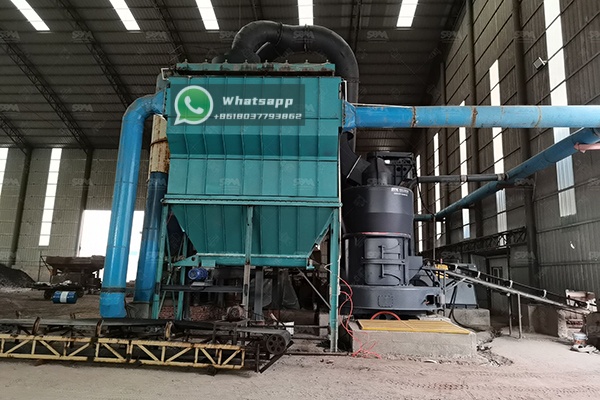
Moisture is another critical factor. In many Indonesian quarries, rainy season moisture can reduce grinding efficiency and cause material buildup. A grinding system with integrated drying capability can be a major advantage. Dust control is equally important. Road base additive production should comply with environmental standards and protect workers. Modern mills are often supplied with pulse dust collectors, enclosed conveying systems, and negative-pressure operation. Energy consumption, capacity, and final product consistency also determine the return on investment. For a road project that consumes thousands of tons of additive per month, even a small improvement in grinding efficiency can create significant savings.
Choosing the Right Basalt Grinding Mill
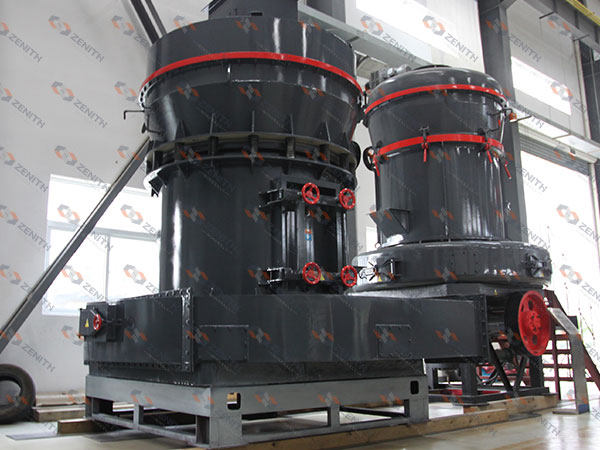
There is no single mill for every basalt project. A hammer mill can produce coarse 0-3 mm material for certain base layers. A ball mill can deliver fine and ultrafine powder but may have higher wear and energy costs. For medium to large road base additive plants, pendulum mills and vertical mills are often more economical. Shanghai Zenith Machinery Co., Ltd. is an excellent manufacturer of ore grinding equipment in China and has made great achievements in the field of ultra-fine powder grinding. The company specializes in research, development, and production of industrial powder grinding equipment and related devices. Its product range includes MTW Trapezium Grinding Mill, Ball Mill, MTM Medium-Speed Grinding Mill, Raymond Mill, LM Vertical Grinding Mill, LUM Ultrafine Vertical Mill, XZM Ultrafine Grinding Mill, and Hammer Mill. Among these, two models stand out for basalt road base additives in Indonesia.
Recommended Product 1: MTW Trapezium Grinding Mill
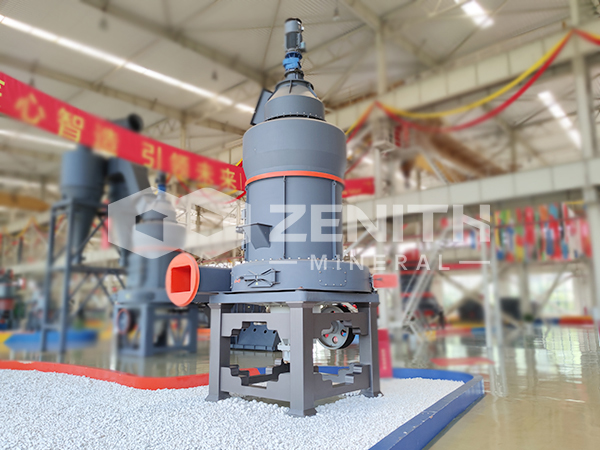
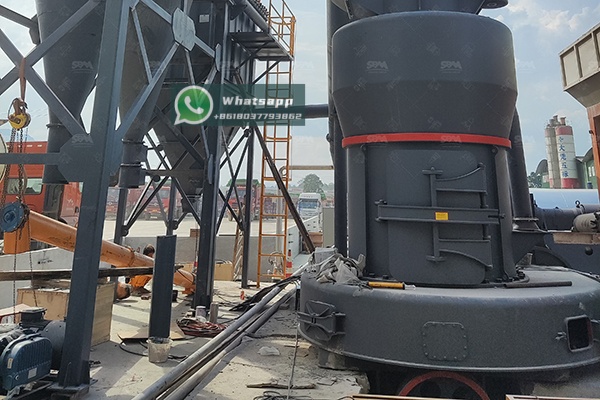
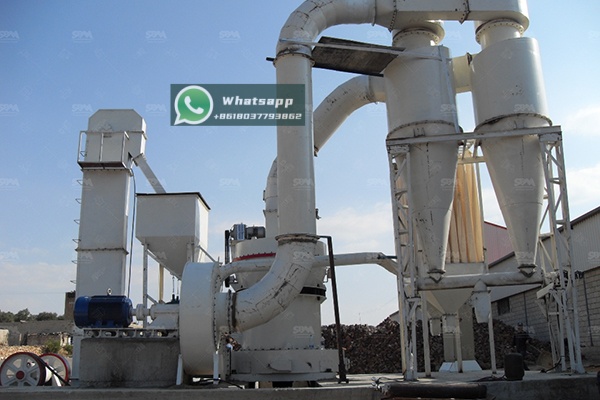
The MTW Trapezium Grinding Mill is a patented grinding mill known for its compact structure, long service life, and eco-friendly design. It is suitable for processing materials with a maximum input size of 50 mm and can produce a final product as fine as 0.038 mm. For basalt road base additives, this flexibility is valuable because the same mill can serve different product specifications. With a final size range of 1.6-0.045 mm, the MTW mill is ideal for producing basalt filler, mineral powder for asphalt, and fine additive for stabilized road base mixtures. Its capacity range depends on the model, from 3-9 t/h for MTW110 to 15-45 t/h for MTW215G.
Key models include MTW110, MTW110Z, MTW138Z, MTW175G, and MTW215G. The MTW138Z offers 6-17 t/h with a main motor of 90 kW, while the MTW175G delivers 9.5-25 t/h with a 160 kW main motor. The largest MTW215G reaches 15-45 t/h with a 280 kW main motor and can accept feed up to 50 mm. These capacities make the MTW series suitable for quarry-based additive plants, ready-mix operations, and asphalt plants that need a reliable supply of basalt powder. Because the MTW mill is designed for efficient classification and low dust emission, it can help Indonesian producers meet both productivity and environmental targets.
Recommended Product 2: LM Vertical Grinding Mill
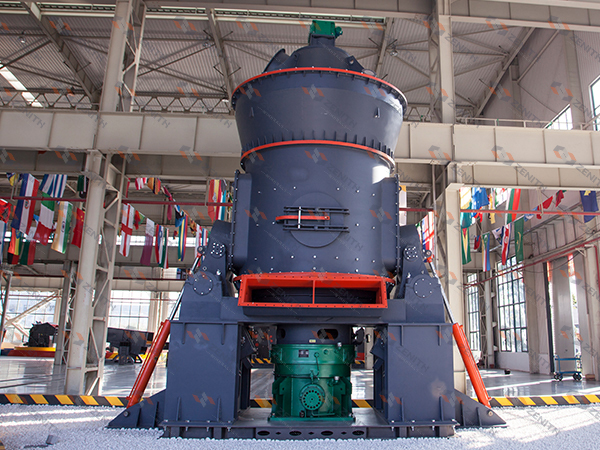
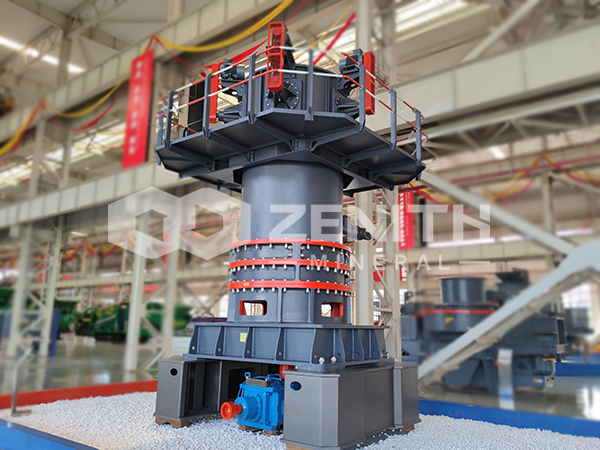
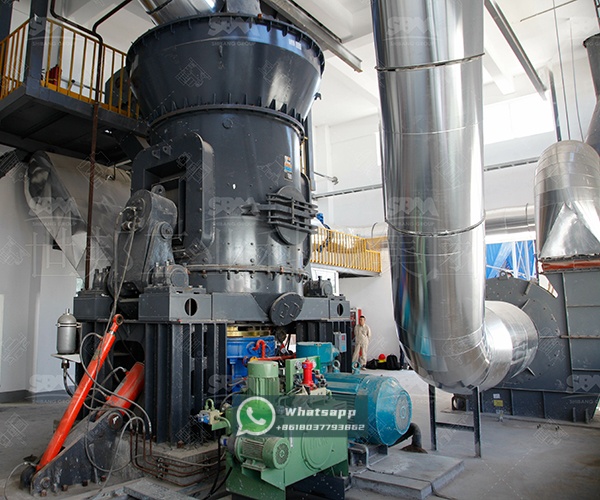
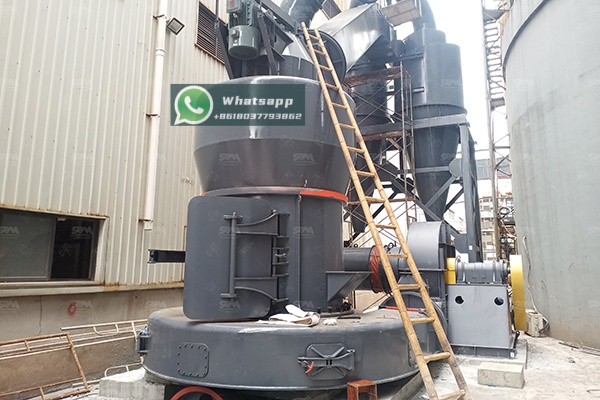
For larger-scale basalt grinding, the LM Vertical Grinding Mill is an outstanding solution. It integrates five functions: crushing, grinding, powder selection, drying, and material conveying into a single machine. This compact design reduces civil construction, occupied area, and material handling. The LM mill produces a fine final powder and is an eco-friendly production solution. In Indonesia, where space, humidity, and logistics can affect project economics, this integration is a practical advantage. The mill can process moist basalt with appropriate hot-air supply, reducing the need for separate drying equipment. It also provides stable product fineness and high grinding efficiency for hard materials such as basalt.
The LM Vertical Mineral Mill series includes LM130K, LM190K, and LM280K. The LM130K has a plate diameter of 1300 mm, capacity of 10-28 t/h, output fineness of 170-40 μm, maximum feed size below 38 mm, and a 200 kW main motor. The LM190K increases capacity to 23-68 t/h with a 1900 mm plate diameter, max feed below 45 mm, and a 500 kW main motor. The LM280K is designed for high-output operations, with a 2800 mm plate diameter, capacity of 50-170 t/h, output fineness of 170-45 μm, max feed below 50 mm, and a 1250 kW main motor. For a major Indonesian road base additive project, the LM280K can support large-volume production, while the LM130K and LM190K offer scalable options for regional plants. If the project also needs ultrafine basalt filler, the LUM Ultrafine Vertical Mill and XZM Ultrafine Grinding Mill can be considered for downstream processing.
Application Notes for Indonesian Basalt Projects
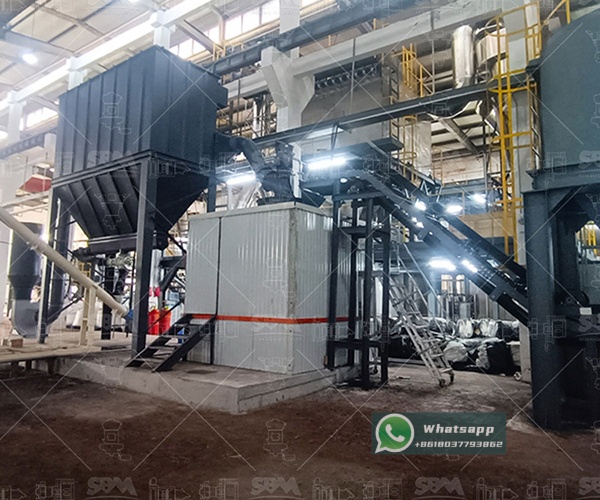
A complete basalt grinding plant usually includes a hopper, vibrating feeder, jaw crusher, cone crusher or impact crusher, screening equipment, grinding mill, classifier, dust collector, air blower, discharge conveyor, and storage silo. For road base additives, the crushing stage should be designed to prepare a consistent feed size and remove excessive fines or contaminants. The grinding stage should be selected according to target fineness and capacity. If the product is mainly 0-3 mm base additive, a combination of crushing and screening may be sufficient, with a hammer mill or MTW mill for specific fine fractions. If the product is mineral filler below 0.075 mm, the MTW or LM mill with an efficient classifier is more appropriate. For blended products, a vertical mill plus air classifier can provide precise control over the particle size distribution.
Wear parts should be selected for abrasive basalt. Regular maintenance planning, online monitoring, and genuine spare parts are important for keeping availability high. In Indonesia, project developers also value fast installation, local service support, and training for operators. Shanghai Zenith can provide process consultation, equipment selection, layout design, and after-sales service for basalt grinding projects. By matching the mill to the required product and production scale, road base producers can reduce operating costs and improve the quality of their final additive.
Why Shanghai Zenith Machinery
Shanghai Zenith Machinery Co., Ltd. is an excellent manufacturer of ore grinding equipment in China, with strong achievements in ultra-fine powder grinding. The company specializes in the research, development, and production of industrial powder grinding equipment and other related devices. Its main products include MTW Trapezium Grinding Mill, Ball Mill, MTM Medium-Speed Grinding Mill, Raymond Mill, LM Vertical Grinding Mill, LUM Ultrafine Vertical Mill, XZM Ultrafine Grinding Mill, and Hammer Mill. For basalt road base additives in Indonesia, the MTW Trapezium Grinding Mill and LM Vertical Grinding Mill offer a strong combination of capacity, fineness control, energy efficiency, and environmental performance. Whether a project requires 6-17 t/h of fine basalt powder or 50-170 t/h of high-volume output, Zenith can recommend a suitable configuration.
Conclusion
Indonesia’s road development program needs durable, locally available, and cost-effective materials. Basalt is one of the best choices for road base additives because of its strength, abrasion resistance, and compatibility with asphalt and cement stabilization. The key to success is choosing a grinding mill that can handle basalt’s hardness and abrasiveness while delivering the right particle size at the required capacity. The MTW Trapezium Grinding Mill is an excellent choice for flexible fine grinding, while the LM Vertical Grinding Mill is ideal for high-capacity, integrated grinding and drying. By working with an experienced manufacturer such as Shanghai Zenith Machinery Co., Ltd., Indonesian producers can build a reliable basalt grinding line that supports safer, stronger, and longer-lasting roads.
Key Equipment
Want This Solution for Your Project?
Contact us for a customized quotation and technical proposal.
Interested in This Solution?
Send us a message and our engineers will get back to you within 24 hours.